
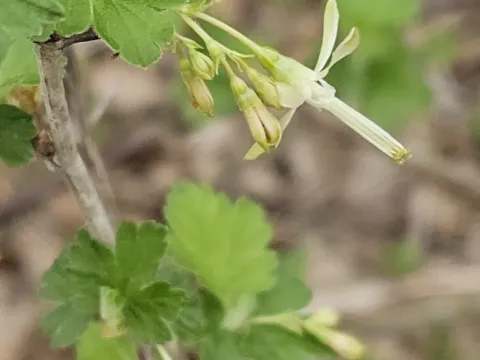
Missouri currant
Ribes missouriense
Propagation of the Missouri currant is best achieved through vegetative methods, such as hardwood cuttings or layering, to ensure the offspring maintain desired traits.
What the section contains
Missouri currant
Hardwood cuttings should be prepared during the dormant season and can be planted in prepared nursery beds in early spring once the soil thaws.
Fall planting is generally preferred in regions with mild winters, as it allows the root system to establish itself before the intense summer heat arrives.
The spacing between plants should be sufficient to allow for air circulation, usually ranging from 1 to 1.5 meters, with row spacing of about 3 meters.
Deep planting is not recommended; the roots should be covered with soil at the same level they occupied in the nursery container or mother plant location.
The Missouri currant, belonging to the Grossulariaceae family, is highly valued for its exceptional drought tolerance and adaptability to varied climates.
This species thrives in full sun exposure, although it exhibits a remarkable ability to tolerate partial shade while still producing a reasonable harvest.
It is notably undemanding regarding soil type, performing well in various textures including heavy loams and even slightly alkaline soil conditions.
The plant demonstrates extreme winter hardiness, making it an excellent choice for northern regions where other berry varieties might fail to survive.
Maintenance involves minimal irrigation once established, as the deep root system allows the shrub to withstand extended dry periods effectively.
The Missouri currant is known for its consistent productivity due to late bloom times, which help the plant escape damage from late spring frosts.
Berries ripen over an extended period, requiring multiple harvests to collect the fruit at the peak of its sugar content and maturity.
A well-maintained mature shrub can yield between 3 and 5 kilograms of fruit annually, depending on the vigor of the plant and seasonal conditions.
The fruits have a unique, slightly spicy flavor profile and are widely processed into jellies, jams, and refreshing beverages rather than consumed fresh.
Productivity typically begins around the third or fourth year of growth and remains stable for over a decade if proper pruning practices are followed.
One of the primary benefits of this species is its natural resistance to many common currant diseases, most notably powdery mildew.
Aphids can occasionally colonize young growth, especially during periods of stress, and should be monitored during the early spring flush.
Leaf spot diseases may appear if there is poor air circulation or excessive moisture, necessitating proper thinning of the shrub's branches.
Integrated pest management, including regular inspection and sanitation, is sufficient to keep the plants healthy in most garden environments.
Chemical intervention is rarely needed but should be considered only if pest populations threaten the long-term vitality of the shrub.
Harvesting should be performed by hand when the berries change color and develop a soft texture, indicating full physiological ripeness.
The fruit does not store for long periods at room temperature and should be refrigerated or processed within 24 to 48 hours of picking.
For industrial or large-scale harvest, shallow containers are used to prevent the weight of the fruit from crushing the bottom layers.
Careful handling is required as the fruit is delicate, and bruised berries can lead to rapid fermentation or mold development.
Regular harvesting helps maintain the plant's health and encourages the concentration of energy into the remaining developing fruit clusters.