
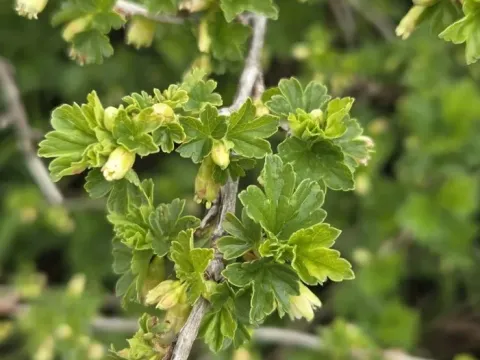
Hairy-stem gooseberry
Ribes hirtellum
The hairy-stem gooseberry (Ribes hirtellum) belongs to the Grossulariaceae family. It is native to North America, where it typically inhabits cool, moist forest environments and rocky slopes.
What the section contains
Hairy-stem gooseberry
This deciduous shrub usually grows up to one meter in height. Its young branches are characterized by fine hairs, while mature stems may develop thorns at the nodes.
The plant requires consistent soil moisture and is sensitive to prolonged drought or extreme summer heat, which can cause significant stress to the vegetation.
Ideal planting sites include fertile, well-drained loamy soils with a neutral pH. Proper drainage is essential to prevent root rot and other moisture-related diseases.
Regular mulching around the root zone is a critical agricultural practice to ensure stable soil temperatures and moisture retention throughout the growing season.
In agriculture, Ribes hirtellum is primarily valued for its role in genetic breeding. It has been extensively used to develop disease-resistant gooseberry cultivars.
The fruits are edible and possess a pleasant flavor, though they are generally smaller than those of the common cultivated gooseberry varieties found in commercial markets.
While not a primary commercial crop for mass production, these berries are excellent for small-scale culinary uses, such as preserves, jams, and home-made desserts.
Yields are highly dependent on environmental conditions, particularly the amount of organic matter in the soil and the availability of water during the fruit-setting period.
Harvesting can be challenging due to the spiny nature of the branches, often requiring the use of protective gear to manage the harvest effectively and safely.
The most notable feature of this species is its natural resistance to American gooseberry mildew, making it a critical asset for plant breeders worldwide.
Common pests include the gooseberry fruitworm and various species of aphids that target tender foliage, potentially stunting the growth of new shoots.
Maintaining adequate space between plants is vital to promote air circulation, which helps prevent fungal leaf spots and other pathogens from spreading.
Regular pruning of old or diseased stems is a fundamental maintenance task that supports plant vigor and reduces the likelihood of pest infestations.
Integrated pest management, including monitoring and timely intervention with environmentally friendly solutions, helps maintain the health of the shrubs over time.