
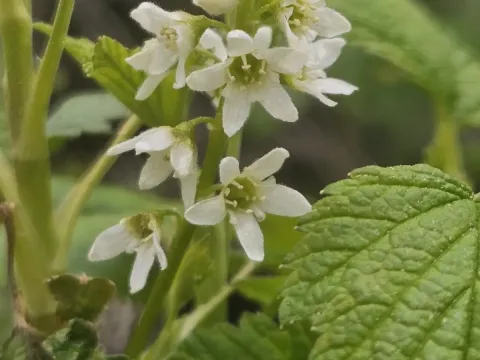
Hudson Bay currant
Ribes hudsonianum
The Hudson Bay currant (Ribes hudsonianum) is a deciduous shrub belonging to the Grossulariaceae family. Native to the northern regions of North America, it thrives in cool, moist habitats like riverbanks and forested wetlands.
What the section contains
Hudson Bay currant
This shrub is exceptionally hardy, capable of withstanding extreme cold typical of northern climates. It prefers semi-shaded conditions where it can avoid the intense midday sun that often causes drought stress in more delicate species.
Soil requirements for Ribes hudsonianum include high organic matter content and consistent moisture. While the plant appreciates well-drained soil, it shows better tolerance for damp conditions compared to most commercial black currant varieties.
Botanically, this species is distinct due to the lack of aromatic glands on its leaves, which differentiates it from the common European black currant. The shrubs grow upright, featuring five-lobed leaves and distinctive white flowers that bloom in elongated racemes.
Economically, the plant is valued for its hardiness and serves as a genetic resource for breeding programs aiming to develop berries resistant to harsh environmental conditions. Its berries are used in local culinary traditions for their unique flavor profile.
Like many species in the Ribes genus, the Hudson Bay currant is susceptible to powdery mildew. This fungal infection thrives in stagnant air and high humidity, necessitating proper spacing during plantation.
Spider mites represent a significant pest threat, especially in hot and dry summers. They feed on the sap of the leaves, leading to chlorosis and early leaf senescence if left uncontrolled.
Anthracnose is another common disease that manifests as dark spots on leaves, which can severely reduce the plant's photosynthetic capacity. Preventive copper-based fungicide treatments are often used in early spring.
The currant bud mite is a critical concern, as it targets developing buds. Integrated pest management strategies, such as physical removal of infested buds and usage of horticultural oils, are effective control methods.
Maintaining plant health through adequate nutrition and regular pruning is essential to minimizing the impact of pests and diseases, ensuring long-term shrub productivity.
Harvesting the Hudson Bay currant is usually performed when the berries turn a deep, dark blue or near-black color. Since they do not ripen all at once, multiple picking sessions are often required to ensure high quality.
The fruits have thin skins and are relatively fragile. Therefore, careful hand harvesting is recommended to prevent bruising, which would otherwise lead to rapid fermentation and decay.
Once picked, the berries should be kept in a cool environment or processed immediately. They are excellent for jams, jellies, and infusions due to their high nutritional density and specific tartness.
Pruning should be coordinated with the harvesting period. Removing old, unproductive wood while collecting the berries helps to stimulate the growth of new fruiting shoots for the following season.
Optimal harvest timing is dictated by the specific microclimate of the cultivation site, typically occurring in mid-to-late summer when the sugar-to-acid ratio in the fruit is well-balanced.