
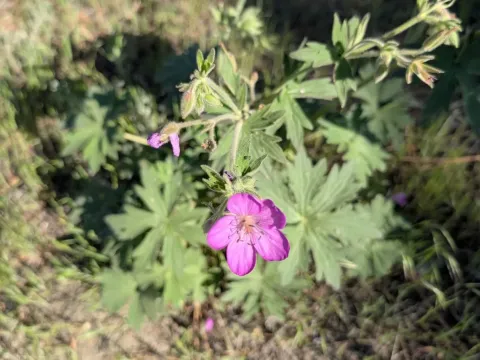
Sticky purple geranium
Geranium viscosissimum
Sticky purple geranium (Geranium viscosissimum) belongs to the Geraniaceae family and is typically propagated by seeds or division. Autumn sowing in open ground is preferred to allow for natural cold stratification during winter.
What the section contains
Sticky purple geranium
If started indoors, seeds should be sown in early spring in well-draining seed-starter mix. Germination usually occurs within 3–4 weeks under stable temperature conditions.
Seedlings should be hardened off before transplanting into the field. Adequate spacing of about 50 centimeters is essential to prevent overcrowding and allow for healthy root development.
Young plants benefit from consistent moisture during their first growing season to establish a robust root system before the onset of summer heat.
The selection of the planting site should prioritize well-drained soil types, as the species is sensitive to waterlogged conditions that may trigger root decay.
This plant thrives in temperate climates and is native to western North America. It prefers full sun or partial shade exposures to maximize growth potential.
Soil requirements include moderate fertility and excellent drainage. Loamy or sandy-loam soils are ideal for supporting the plant's long-term health and vitality.
Regarding climate, the plant is highly cold-hardy, making it suitable for regions with harsh winter temperatures. It performs well in varied precipitation zones.
Maintenance involves minimal intervention; however, seasonal mulching helps retain soil moisture and suppresses weeds effectively during the summer months.
Regular fertilization is not mandatory but can boost growth in nutrient-poor soils if applied during the early spring vegetative growth phase.
The plant is relatively resilient, but it can be susceptible to powdery mildew under conditions of high humidity and poor air circulation among the foliage.
Common pests include aphids and mites, which are most active during dry spells. Monitoring the underside of leaves helps in early detection of infestations.
Root rot is the most significant threat to the plant's survival, usually caused by over-irrigation or soil compaction in heavy clay environments.
Prevention involves ensuring proper drainage, avoiding overhead watering in the evenings, and removing any decaying plant material promptly.
- Monitor for insect clusters during early summer.
- Ensure 50cm spacing for airflow.
- Apply fungicides only as a last resort.
- Remove debris at the end of the season.
Harvesting of aerial parts, if intended for specialized use, is best performed during the peak flowering stage when essential oil concentration is highest.
Stems should be cut cleanly using sanitized tools to prevent the transmission of pathogens between individual plants in the field.
After harvesting, the material must be dried in a shaded, well-ventilated area to maintain its quality and prevent mold growth during storage.
Seed collection for future planting can be conducted once the seed capsules turn brown but before they naturally dehisce and scatter.
Post-harvest management of the planting site involves clearing away stalks and debris to reduce the overwintering potential of pests and diseases.