
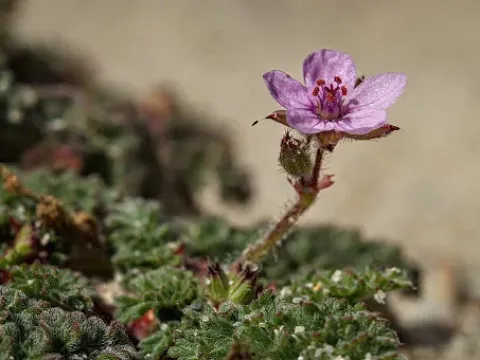
Stork's bill (Erodium anaristatum)
Erodium anaristatum
Erodium anaristatum, commonly associated with the stork's bill family (Geraniaceae), is a resilient crop that requires careful planning during the sowing season. Early spring, when soil temperatures reach stable levels, is the ideal time to establish the crop for successful germination.
What the section contains
Stork's bill (Erodium anaristatum)
Seedbed preparation is vital for this species. The soil must be finely tilled to ensure consistent contact between the small seeds and the soil particles. Avoiding deep burial is crucial, as seeds should typically be sown at a depth of 1 to 2 centimeters.
Standard agronomic practice involves using grain drills with row spacings of 15 to 20 centimeters. This setup allows for adequate plant density, which prevents excessive overcrowding while ensuring the canopy closes quickly enough to suppress competing weeds.
After seeding, rolling the field is a standard procedure to improve soil-to-seed contact. This practice promotes the capillary movement of soil moisture, which is necessary to trigger uniform emergence across the entire field.
In regions with mild winters, autumn sowing can be explored to utilize the early spring moisture effectively. However, this depends on local frost patterns and the specific hardiness of the chosen cultivar in the farming region.
This crop thrives in well-drained, light-textured soils such as sandy loams. Poor drainage and waterlogged conditions are highly detrimental to its root health and can significantly reduce the overall stand quality during the growing season.
Light exposure is a critical environmental factor. Erodium anaristatum performs best in full sunlight; shading from surrounding vegetation or buildings should be avoided to ensure maximum photosynthetic efficiency and biomass production.
The plant is highly drought-tolerant, making it an excellent choice for arid or semi-arid agricultural zones. Its deep taproot system allows it to reach water reserves that are inaccessible to many other shallow-rooted forage crops.
Optimal pH levels for the soil range from neutral to slightly alkaline. Acidic soils should be amended with lime well in advance of sowing to create an environment where the crop can maximize its nutrient uptake capacity.
Fertilization should prioritize phosphorus and potassium to strengthen roots and improve plant stress tolerance. Nitrogen should be applied judiciously, mainly in the early vegetative stages to encourage rapid leaf development without causing lodging.
Fungal pathogens, particularly those causing root rot, represent the primary threat to stand longevity. These issues are almost always linked to poor water management and stagnant air movement within the crop canopy during humid weather.
Insect pests, such as aphids and certain coleopteran larvae, can cause economic damage if populations are not monitored. Integrated pest management (IPM) strategies, including biological control agents, are preferred to maintain field health.
Leaf spots are common in environments with frequent rainfall and high humidity. While usually not fatal, these infections reduce the total quality of the forage or crop product, necessitating proper crop rotation to break the disease cycle.
Nematode infestations are a specific concern in fields that lack proper rotation. To maintain healthy soil, farmers should avoid planting Erodium species on the same ground more than once every three years.
Regular field scouting is essential during the flowering stage. Early identification of pest clusters or signs of wilting can save the entire harvest, allowing for targeted interventions before the problem spreads across the field.