
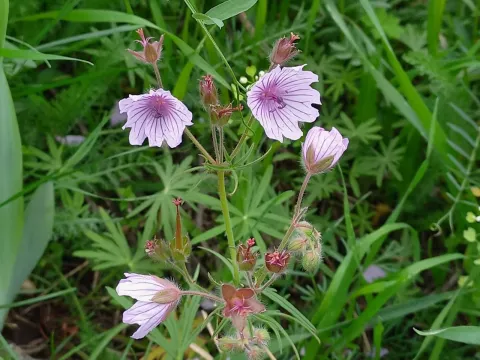
Transverse geranium
Geranium transversale
Geranium transversale is a distinct herbaceous perennial species belonging to the Geraniaceae family. Its biological characteristics are uniquely adapted to temperate, high-altitude climates where humidity and light levels fluctuate seasonally.
What the section contains
Transverse geranium
To ensure optimal development, the soil must be well-drained and slightly porous. Incorporating organic matter into the planting site improves nutrient availability and moisture retention without causing waterlogging.
Cultivation requires exposure to filtered sunlight or partial shade. Direct midday sun in excessively hot regions can cause leaf scorch, so selecting an appropriate site is crucial for maintaining the plant's health.
Agricultural management should focus on consistent but moderate watering. Drip irrigation is often preferred to keep foliage dry, which significantly reduces the risk of fungal proliferation on the leaves.
Regular maintenance includes removing dead foliage to encourage new growth cycles and applying a balanced, slow-release fertilizer during the active vegetative growth phase in early spring.
The primary threats to this culture include various types of root rot and leaf spot diseases. These are typically triggered by environmental stress, such as poor ventilation or excessive moisture in the root zone.
Insects like aphids and spider mites frequently target the plant, especially during dry spells. These pests cause damage to leaves and stems, significantly weakening the plant's overall vitality if left untreated.
Fungal infections can spread rapidly in crowded conditions. Maintaining proper spacing between plants is essential for promoting airflow and minimizing the spread of harmful spores.
Preventative measures include treating seeds or cuttings with fungicides before planting and maintaining clean garden tools to avoid accidental cross-contamination between different garden beds.
Integrated pest management, including the use of beneficial insects and traps, is recommended to keep pest populations below the economic threshold without damaging the local ecosystem.