
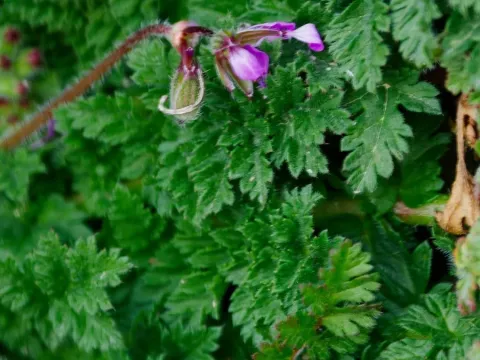
Storksbill
Erodium L'Hér.
Storksbill (Erodium L'Hér.) belongs to the Geraniaceae family and is recognized for its medicinal and ecological value. The plant gets its common name from the resemblance of its seed pods to the bill of a stork, which are highly efficient at self-burying in the soil.
What the section contains


Storksbill
The optimal sowing time for Erodium is early spring, immediately following the last frost. Seeds should be planted in rows with sufficient spacing to ensure maximum sunlight exposure and air circulation throughout the development of the leaf rosette.
This crop thrives in diverse environments, demonstrating excellent drought tolerance and adaptability. It prefers well-drained, sandy, or neutral soils and requires full sun exposure for the production of essential oils and active botanical compounds.
Maintenance involves minimal irrigation, as the plant is adapted to arid conditions. It is essential to manage soil pH, keeping it between 6.0 and 7.5 to support healthy root development and efficient nutrient uptake during the active growing season.
Disease incidence in Storksbill is generally low due to its robust nature. However, excess humidity during the vegetative stage can lead to powdery mildew outbreaks. Proper drainage is the primary defense against such fungal threats.
Pest pressures primarily include aphid infestations and flea beetles that target young tender leaves. Integrated pest management strategies are recommended to maintain high yield quality, avoiding unnecessary chemical applications whenever possible.