
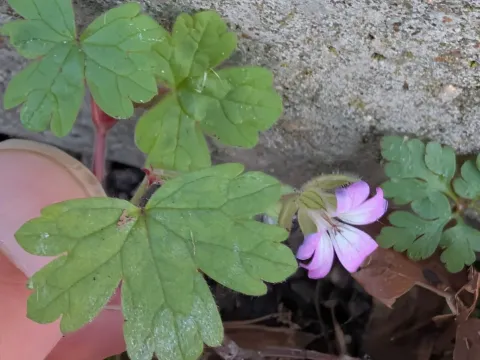
Round-leaved cranesbill
Geranium rotundifolium
The round-leaved cranesbill typically behaves as an annual plant, with germination occurring in both autumn and spring. Seeds that drop in late summer often germinate shortly thereafter, forming a rosette that survives the winter months.
What the section contains
Round-leaved cranesbill
Spring germination is triggered by rising soil temperatures, usually starting in March or April. The species exhibits high vigor, allowing it to establish itself rapidly in open, disturbed soils, which is characteristic of its behavior in agricultural fields.
The seeds possess a natural dormancy mechanism that can be broken by soil cultivation, making this plant a frequent colonizer of recently tilled land. Managing the timing of cultivation is essential to control its spread across large areas.
Under controlled agricultural conditions, seeds should be sown at a shallow depth of 1-2 cm. This ensures uniform emergence and facilitates the monitoring of development cycles for research or management purposes.
High seed production potential means that even a small population can lead to significant infestations. Therefore, preventing the plant from reaching the seed-set stage is a critical priority for land management.
This species thrives in a variety of soil types, ranging from sandy loam to heavy clay. It shows a preference for nutrient-rich, neutral, or slightly alkaline soils where it can compete effectively with other vegetation.
Light intensity is a critical factor; the plant performs best in full sun or light shade. Excessive shading significantly reduces its growth rate and prevents the development of mature, reproductive stems.
While the round-leaved cranesbill is relatively drought-tolerant, it grows most vigorously in conditions with regular moisture availability. Its taproot system allows it to access water deeper in the soil profile than many competing shallow-rooted weeds.
Temperature fluctuations are well-tolerated by the species, provided the growing season remains within typical temperate parameters. It is particularly well-adapted to surviving cool spring conditions during its early growth phases.
Cultural control methods such as crop rotation and the use of competitive cover crops are highly effective. These strategies reduce the available space and nutrients, limiting the successful establishment of the cranesbill.
Powdery mildew is a common fungal pathogen that affects the foliage of the round-leaved cranesbill during periods of high humidity. The white mycelial growth can drastically hinder photosynthesis, weakening the entire plant.
Root-related diseases, often exacerbated by poor soil drainage, pose a lethal threat to the plant. Stunted growth and necrotic root tissues are classic indicators of these underground pathogens.
Insect pests, primarily aphids, are known to feed on the tender young leaves and flower buds. Their feeding activity can cause leaf curling and transmit viral diseases that further compromise the plant's health.
Spider mites are another major threat, particularly in dry and dusty environments. They cause stippling on the leaves and can lead to rapid senescence if the infestation is not managed during the early stages.
Integrated pest management (IPM) practices, including the removal of field margins and regular field monitoring, are essential to minimize the risk of spreading these pests and diseases to surrounding crops.