
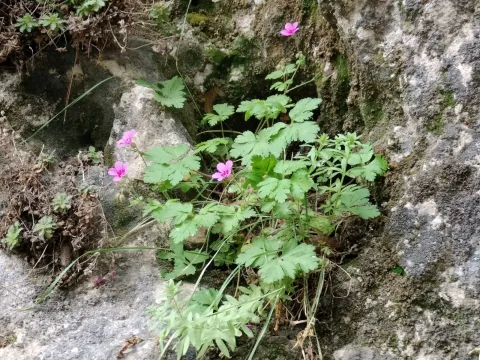
Waterfall cranesbill
Geranium cataractarum
Waterfall cranesbill (Geranium cataractarum) belongs to the Geraniaceae family and is known for its distinct botanical traits suited for specialized landscapes.
What the section contains
Waterfall cranesbill
Propagation is typically achieved through seeds, which require stratification to break dormancy effectively before the planting process begins.
Seeds should be sown in a sterile, well-draining seed-starting mix. Optimal temperatures for germination range between 18 and 20 degrees Celsius.
Once seedlings have developed two sets of true leaves, they should be transplanted into individual pots to avoid competition for nutrients and space.
Vegetative propagation via root division is also feasible and is best performed during the early spring months to ensure rapid re-establishment.
This species thrives in well-draining soils with a neutral pH level, mirroring its native habitat on rocky slopes and mountainous regions.
Effective drainage is non-negotiable for this plant, as stagnant water around the roots quickly leads to fungal decline and plant mortality.
The plant prefers dappled shade or indirect morning sunlight, which helps maintain soil moisture while avoiding leaf scorch during peak heat.
Cultural practices should emphasize consistent but moderate watering, ensuring the soil remains moist but never waterlogged at any point.
Applying a thin layer of mulch around the base of the plant helps to regulate soil temperature and retain necessary humidity during the growing season.
The primary threats to the plant's health involve root pathogens caused by poor site selection and improper irrigation management in the garden.
Powdery mildew can occur if the plant is situated in a high-humidity environment with insufficient air circulation between adjacent specimens.
Common insect pests include spider mites and aphids, which tend to infest the plant during prolonged dry spells or periods of environmental stress.
Proactive management involves monitoring the foliage weekly and utilizing integrated pest management strategies to keep infestation levels low.
- Maintain proper spacing for airflow.
- Avoid overhead irrigation.
- Monitor for early signs of chlorosis.