
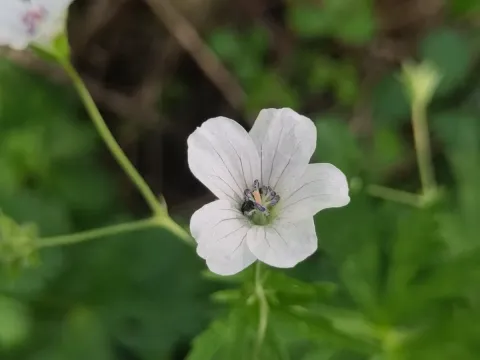
River Geranium
Geranium rivulare
River Geranium (Geranium rivulare) is a member of the Geraniaceae family. It is a hardy herbaceous perennial natively found in damp meadows, stream banks, and subalpine regions, reflecting its preference for moist environments.
What the section contains
River Geranium
The plant is defined by its distinct basal leaf rosettes and upright floral stems. The flowers are typically white to soft pink, adding delicate texture to gardens when they bloom in late spring and early summer.
For successful cultivation, the plant requires nutrient-rich, well-draining soil that retains moisture throughout the growing season. While it is adaptable, it performs best in soils with high organic matter content.
In terms of climate, it thrives in cool to temperate regions. It is well-adapted to shade and partial shade environments, which prevent the leaves from scorching while maintaining the necessary humidity for optimal health.
The primary use of Geranium rivulare is in ornamental horticulture. It is highly valued as a groundcover for damp areas and shade gardens, where it creates a naturalistic, low-maintenance display that persists for many years.
Common agricultural threats include fungal pathogens such as powdery mildew and root rot. These diseases are usually triggered by poor air circulation and excessive standing water around the crown of the plant.
Pest management involves monitoring for aphids and slugs, which may cause aesthetic damage to the leaves. Maintaining a clean garden environment and proper spacing significantly reduces the risk of pest outbreaks.