
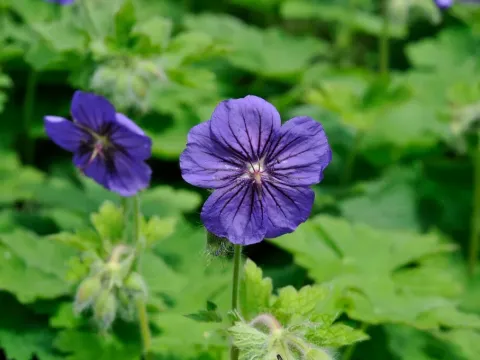
Peloponnese Geranium
Geranium peloponnesiacum
Peloponnese Geranium is a perennial herbaceous plant belonging to the Geraniaceae family. The crop can be propagated through seeds or vegetative methods such as root division, which is the preferred way to maintain cultivar characteristics.
What the section contains
Peloponnese Geranium
When propagating by seed, sowing is best performed in late autumn or early spring. Stratification is highly recommended for seeds, as it improves germination rates and helps produce vigorous seedlings suitable for field or garden transplantation.
Vegetative propagation via root division should be carried out during the plant's dormant periods: early spring or late August. This timing ensures that the root system establishes itself sufficiently before the onset of extreme weather.
The plant grows in dense clusters, which helps in suppressing weed competition in the surrounding area. When planting, maintain adequate spacing to ensure that each plant has enough room for air circulation, which is vital for long-term health.
As the plant matures, it becomes more resilient to environmental stressors. Proper sowing depth and soil preparation during the initial phase are critical factors that determine the long-term success and productivity of the crop.
The crop thrives in well-drained, fertile soils with a neutral or slightly acidic pH. Avoiding waterlogging is essential, as the roots are susceptible to rotting if exposed to stagnant moisture for prolonged periods.
Peloponnese Geranium prefers full sun but can tolerate partial shade in hotter climates. Adequate exposure to sunlight is crucial for maintaining the plant's compact growth habit and ensuring a profuse blooming period throughout the season.
Watering requirements are moderate. Once established, the plant exhibits good drought tolerance, although supplemental irrigation during extended dry spells will significantly improve the overall ornamental quality and vitality.
Fertilization with balanced NPK fertilizers in early spring is beneficial for promoting growth. Avoid excessive nitrogen applications, as this promotes foliage growth at the expense of flower production, which is undesirable for ornamental purposes.
Winter hardiness is a notable trait of this species. In temperate zones, it survives outdoors without protection, though a layer of organic mulch can assist in retaining soil moisture and protecting the crown during harsh winters.
Peloponnese Geranium generally possesses high resistance to pests and diseases. However, improper drainage can lead to root rot, which is the most common pathology encountered in poorly managed agricultural settings.
Powdery mildew is a potential threat during periods of high humidity and poor ventilation. Keeping the planting site clean and thinning out dense foliage are effective cultural practices to mitigate the risk of fungal infections.
Pests such as aphids and spider mites may occasionally infest the plants, particularly if they are under stress. These insects feed on sap and can cause leaf yellowing and reduced vigor if left untreated.
Integrated pest management should be the standard approach for this crop. Monitoring for early signs of infestation and applying biological control methods or selective insecticides can prevent damage without harming beneficial insects.
Maintaining high hygiene standards in the field, including the regular removal of dead or diseased tissue, is crucial for preventing the spread of potential pathogens and ensuring the longevity of the perennial stands.