
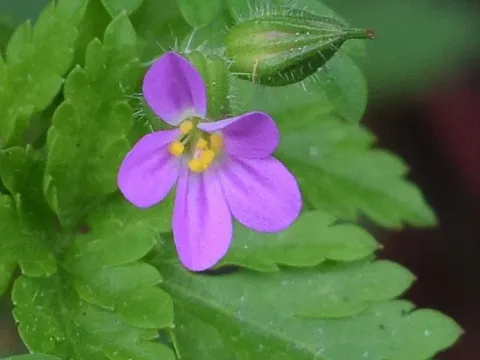
Purple crane's-bill
Geranium purpureum
Purple crane's-bill (Geranium purpureum) is an annual herbaceous plant belonging to the Geraniaceae family. It is typically propagated through seeds, which are sown once the danger of frost has passed in the spring.
What the section contains
Purple crane's-bill
The ideal sowing window is mid-April, when soil temperatures remain consistently above 10 degrees Celsius. Providing a consistent moisture level is crucial for successful seed germination.
For indoor propagation, seeds should be sown in trays during March. Use a light, well-draining potting medium and keep the environment at approximately 20 degrees Celsius to encourage rapid sprouting.
When direct seeding in open fields, place seeds at a depth of 0.5 to 1 centimeter. Covering seeds too deeply may inhibit germination, as this species requires some light exposure for optimal development.
Maintain a planting distance of approximately 25 centimeters between individual plants. This spacing promotes proper airflow, which is essential to prevent fungal outbreaks during the peak growing season.
This species thrives in sunny locations but can tolerate partial shade during the heat of the day. Exposure to direct sunlight is essential for achieving a higher concentration of secondary metabolites.
The plant prefers light, sandy or loamy soils with excellent drainage. Waterlogged soil is detrimental, as it encourages root rot and significantly impacts overall plant vigor and health.
While the plant shows some drought tolerance, consistent moisture during the vegetative growth phase is recommended. Maintaining soil moisture levels near 65% capacity ensures steady development.
Soil pH should ideally be neutral or slightly acidic. If the soil is heavy or prone to compaction, the addition of organic matter or coarse sand during pre-planting preparation is highly recommended.
Fertilization should be balanced, focusing on nitrogen during the early growth phase and switching to potassium-rich fertilizers as the plant begins to form flower buds for better yield.
The yield of Geranium purpureum is highly dependent on environmental conditions and the intensity of the agricultural practices employed throughout the growing season.
Harvesting is usually done at the peak flowering stage, which ensures that the plant contains the highest concentration of active compounds required for medical or industrial processing.
Proper field management, including weed control and adequate irrigation, allows producers to maximize the biomass yield per hectare, making it a viable crop for specialized markets.
Crop rotation is an essential practice to maintain high yields over several seasons. Avoiding consecutive planting of Geranium purpureum in the same field helps prevent soil-borne pathogen buildup.
Economic success relies on the timely processing of the harvested green mass to extract essential oils or dried materials, preserving the volatile compounds that define the crop's market value.
The most common disease affecting this crop is grey mold (Botrytis), which typically appears during periods of high humidity or poor field ventilation, leading to stem decay.
Pests such as aphids and spider mites frequently target the plant's leaves. They suck the sap, which not only causes direct physical damage but also weakens the plant against secondary infections.
Integrated Pest Management (IPM) is the most effective approach. This includes encouraging natural predators and ensuring that field conditions are not conducive to pest population explosions.
Proper sanitation, including the removal of crop debris and neighboring weeds, is a critical step in reducing the local population of pathogens and pests throughout the year.
Chemical control should be used as a last resort, prioritizing selective, bio-based pesticides to ensure the final product remains safe for pharmaceutical or cosmetic use.
Harvesting is performed by cutting the green biomass approximately 5–10 centimeters above the soil level once the majority of the plants have reached full bloom.
Speed is essential after harvesting; the biomass must be transported to a drying or processing facility within 24 hours to prevent heat buildup and the loss of essential oils.
The drying process should take place in a controlled, well-ventilated area away from direct sunlight, with temperatures kept strictly below 40 degrees Celsius to avoid thermal degradation.
Once dried, the herb should be stored in clean, breathable containers, such as paper bags or jute sacks, to protect it from moisture, contamination, and unwanted odors.
Quality assessment involves verifying the color, scent, and moisture content of the dried product, ensuring that it meets professional standards for commercial trade.