

Reference · Crops
Pelargonium
Pelargonium L'Hér. ex Ait.
Propagation of Pelargonium in both commercial and domestic settings is achieved primarily through seeds and cuttings. Seeds are sown mainly during the winter months, from December to February, to ensure flowering plants are ready for the beginning of the spring season.
12
items
What the section contains
 Fingerleaf pelargonium
Pelargonium crispum (P. J. Bergius) L'Hér.
Fingerleaf pelargonium
Pelargonium crispum (P. J. Bergius) L'Hér.
 Hybrids of Pelargonium crispum and Pelargonium x domesticum
Hybrids between Pelargonium crispum and Pelargonium x domesticum
Hybrids of Pelargonium crispum and Pelargonium x domesticum
Hybrids between Pelargonium crispum and Pelargonium x domesticum
 Interspecific pelargonium
hybrids between Pelargonium peltatum and Pelargonium zonale
Interspecific pelargonium
hybrids between Pelargonium peltatum and Pelargonium zonale
 Ivy-leaved pelargonium
Pelargonium peltatum (L.) L'Hér.
Ivy-leaved pelargonium
Pelargonium peltatum (L.) L'Hér.
 Pelargonium grandiflorum
 (Andrews) Willd.
Pelargonium grandiflorum
Pelargonium grandiflorum (Andrews) Willd.
 Pelargonium tricolor
 Curtis
Pelargonium tricolor
Pelargonium tricolor Curtis
 Regal pelargonium
Pelargonium x domesticum L. H. Bailey
Regal pelargonium
Pelargonium x domesticum L. H. Bailey
 Scented geranium
Pelargonium graveolens L'Hér.
Scented geranium
Pelargonium graveolens L'Hér.
 Tonga pelargonium
Pelargonium tongaense Vorster
Zonal pelargonium
Pelargonium x hortorum L. H. Bailey
Tonga pelargonium
Pelargonium tongaense Vorster
Zonal pelargonium
Pelargonium x hortorum L. H. Bailey
 Zonal pelargonium
Pelargonium zonale (L.) L'Hér.
Zonal pelargonium
Pelargonium zonale (L.) L'Hér.
 Zonal pelargonium
Pelargonium zonale (L.) L'Her. ex Aiton x P. tongaense Vorster
Zonal pelargonium
Pelargonium zonale (L.) L'Her. ex Aiton x P. tongaense Vorster
Marketplace
Products in this section · 12


Trifluralin 480 g/L, herbicide
F.A.GAN Chemical Manufacturers Ltd. Israel, member
Herbicides
0
0
8 offers
8.74 €per 1 l
Buy


Triflurex 240 g.e., (Trifluralin, 240 g/l)
F.A.GAN Chemical Manufacturers Ltd. Israel, member
Herbicides
0
0
No offers
—
Details


Pelargonium
For high-quality germination, a stable temperature regime between 20–22 degrees Celsius is required. The substrate for sowing must be light, disinfected, and well-drained, which minimizes the risk of pathogen development during the early stages of seedling growth.
Vegetative propagation (cuttings) allows for the preservation of the cultivar's specific characteristics. The optimal time for taking cuttings is late winter or early spring, as well as the period after the completion of mass flowering in August.
Before planting, cuttings should be dried for several hours to allow the cut to heal (callus formation), which prevents tissue decay. The use of rooting stimulants increases the success rate of the planting material.
Transplanting seedlings to their final location or pots is carried out after the threat of night frosts has passed, as the crop is highly sensitive to sudden temperature fluctuations.
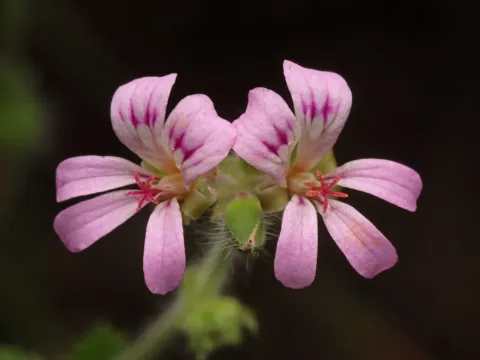
Pelargonium belongs to the Geraniaceae family and is represented in the wild by perennial succulent herbs and shrubs. The origin of most species is South Africa, which determines their high requirement for light intensity.
The plant prefers sunny locations with protection from strong winds. Direct sunlight promotes abundant flowering and helps maintain a compact shrub form, whereas in the shade, the stems tend to stretch excessively.
The crop has moderate soil requirements, preferring fertile, loose substrates with a neutral or slightly acidic pH. An essential condition for successful vegetation is the presence of effective drainage to prevent water stagnation in the root zone.
Watering should be regular but moderate: the soil surface should be allowed to dry out between waterings. Excessive moisture combined with low temperatures is a critical factor leading to root system damage.
During the active growth period, Pelargonium requires regular fertilization with complex mineral fertilizers high in potassium and phosphorus, which stimulates bud initiation.
The economic use of Pelargonium includes ornamental gardening, the perfume industry, and pharmaceutical applications. The crop is valued for its long flowering period and high biomass yield under favorable conditions.
In essential oil production, yield is measured by the amount of green mass per hectare, from which geranium oil is extracted via distillation. Production efficiency depends on cultivar characteristics and the agronomic background.
Ornamental forms are evaluated by the quantity of marketable inflorescences per unit area in greenhouse production. Standardization of agronomic practices allows for achieving high indicators of product uniformity.
To increase yield, apical pinching is applied, which encourages branching and increases the total number of flower stalks. A proper nutritional regime ensures not only aesthetic appeal but also resilience against environmental stress factors.
Maximum productivity is achieved when adhering to optimal planting density, which ensures air circulation between plants, which is critical for the prevention of fungal infections.
Pelargonium is susceptible to a range of specific diseases caused by fungal and viral pathogens. Among these, fungal infections developing under conditions of high humidity are the most dangerous.
Typical diseases affecting the crop include:
- Anthracnose and Grey mold (Botrytis).
- Rhizoctonia and Pythium root rot.
- Verticillium wilt.
- Viral infections: Tomato mosaic virus and Tobacco mosaic virus.
- Sclerotinia rot.
For managing fungal infections, systemic and contact fungicides are used. The most important preventive method is strict adherence to phytosanitary standards and the control of irrigation practices.
Viral diseases cannot be treated directly, so affected specimens must be destroyed immediately. The main vectors for viral spread are insect pests such as aphids, thrips, and whiteflies.
Regular insecticide treatments help suppress pest populations and minimize the risk of viral pathogen spread in both greenhouse and open-field conditions.
Harvesting in the ornamental sector involves the timely removal of faded inflorescences to stimulate secondary flowering. This extends the vegetation period of the plant until late autumn.
For essential oil use, raw material collection is conducted during the period of maximum terpenoid accumulation in the leaves. Usually, this is the phase of mass flowering, when the concentration of aromatic compounds reaches its peak.
Cut material requires rapid delivery to processing facilities to prevent self-heating processes and the degradation of essential oils. The use of specialized equipment minimizes the loss of valuable components.
At the end of the season, when preparing mother plants for winter, a drastic pruning of the stems is performed. Plants are placed in a dormant state at lowered temperatures, which is necessary for successful flower bud development for the following year.
Proper preparation for the dormant period ensures the preservation of planting material and high productivity in the subsequent vegetative cycle.