
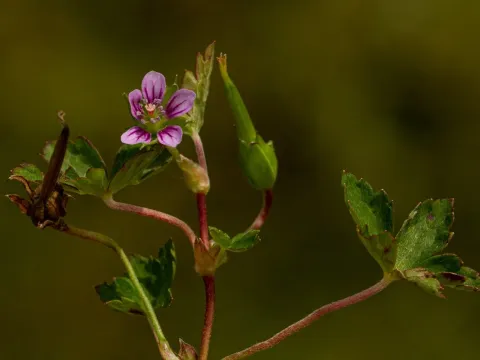
Arabian Geranium
Geranium arabicum
The Arabian Geranium (Geranium arabicum) is a perennial herbaceous plant belonging to the Geraniaceae family. Native to the mountainous terrains of East Africa and the Arabian Peninsula, this species has adapted to survive in harsh, rocky, and high-altitude environments.
What the section contains
Arabian Geranium
Botanically, the plant displays a low-growing habit with intricate, often pubescent leaves that help conserve moisture. Its adaptive nature allows it to thrive in nutrient-poor soils provided that there is adequate drainage, which is crucial for the health of its root system.
Regarding climate requirements, the Arabian Geranium favors cool to moderate temperatures. It performs best in environments where it receives bright, indirect sunlight, making it an excellent choice for well-ventilated areas or rock gardens where the temperature remains stable.
Soil composition should lean towards a gritty, well-draining substrate. Excessive nitrogen in the soil should be avoided, as it encourages weak vegetative growth rather than the compact, resilient structure typical of this species in its natural habitat.
In terms of agricultural and horticultural use, it is highly valued as an ornamental ground cover. Its aesthetic appeal makes it suitable for rockeries, alpine-themed gardens, and containers where water management can be precisely controlled by the grower.
The primary threats to Geranium arabicum are related to moisture-induced pathologies. Root rot and collar rot are common occurrences if the plants are overwatered or if the soil lacks the necessary porosity to allow excess moisture to escape.
Insect pests, particularly spider mites and whiteflies, are frequent problems when the plant is cultivated in indoor settings or greenhouses with low humidity. These pests tend to colonize the undersides of leaves, causing significant stress to the plant.
Effective management of these threats involves a proactive approach to sanitation. Removing dead foliage and ensuring proper spacing between individual plants will significantly reduce the accumulation of humidity and prevent the spread of fungal spores.
If chemical interventions are necessary, growers should opt for mild, systemic insecticides that do not damage the sensitive cuticle of the plant leaves. Always perform a spot test on a small area to ensure the plant reacts favorably to the treatment.
Monitoring the growth environment for early signs of yellowing or stunted development is essential. Early detection of environmental stress or pest presence often allows for manual intervention, negating the need for intensive chemical control measures.