
Viminaria
Viminaria
Viminaria is a monotypic genus of plants belonging to the family Fabaceae, represented by the single species Viminaria juncea. This plant is native to Australia, where it naturally thrives in wet heaths, swamps, and sandy lowland areas across the continent.
What the section contains

Viminaria
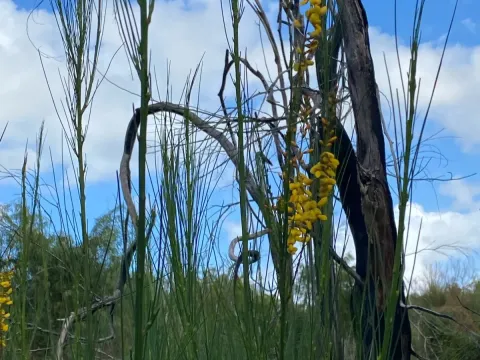
Botanically, it is an evergreen shrub characterized by the absence of true leaves in mature plants. The photosynthesis process is performed by long, slender, and flexible branchlets that resemble rushes, often creating a pendulous and graceful habit as the shrub matures.
The plant thrives in full sun but can tolerate partial shade if the environment remains sufficiently bright. In its native habitat, Viminaria is adapted to nutrient-poor sandy soils, so it does not require heavy fertilization, although excellent soil drainage is essential for survival.
Climatic requirements are focused on mild to warm conditions, as the species is not frost-tolerant. It grows well in areas with moderate humidity and exhibits remarkable resilience to short periods of drought once the plant has established a healthy root system.
In landscape architecture, Viminaria is primarily utilized as an ornamental plant in warm-climate gardens. Its distinctive structural appearance makes it an excellent choice for hedge plantings, screening, or as an architectural focal point in native-style gardens.
The primary threat to the health of this plant is root rot, which occurs if the soil remains waterlogged or if drainage is insufficient during the wetter months. Ensuring the plant is not kept in heavy, stagnant soil is critical to preventing fungal complications.
Pests are generally not a significant issue for outdoor specimens. However, in greenhouse or nursery environments, plants may occasionally be affected by scale insects or mealybugs. If an infestation occurs, systemic insecticides or manual removal are the recommended management strategies.