
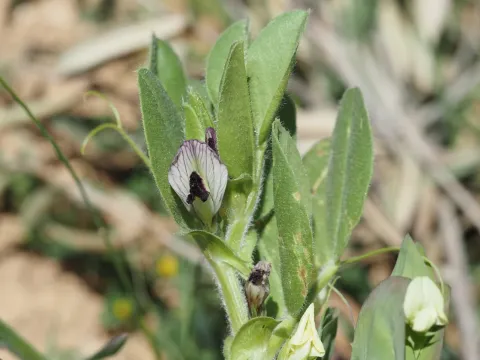
Vicia johannis
Vicia johannis
Vicia johannis is typically sown in early spring as soon as soil conditions allow for proper machinery operation and the soil temperature reaches 3–5 degrees Celsius.
What the section contains
Vicia johannis
The seeds should be planted at a depth of 4–6 centimeters to ensure they remain in the moisture-rich layer of the soil for consistent germination.
The seeding rate varies between 120 and 160 kilograms per hectare depending on seed quality, intended use, and the specific soil structure of the field.
Often, this crop is planted in mixtures with cereals, which requires reducing the seeding density of the legume component to allow both crops to thrive simultaneously.
Early sowing is critical for Vicia johannis to utilize the spring moisture, which supports deep root development before the onset of drier summer months.
As a member of the Fabaceae family, Vicia johannis is well-adapted to various soil conditions, preferring structured loamy and chernozem soils for optimal performance.
The crop thrives in temperate climates and exhibits good resistance to early spring frosts, which protects the seedlings from potential temperature fluctuations.
While the plant is generally resilient, it performs best in regions where average temperatures during the growing season range between 15 and 22 degrees Celsius.
Proper soil aeration and drainage are essential, as the crop does not tolerate waterlogged conditions which may lead to root suffocation and disease development.
Maintaining a neutral soil pH is beneficial for the symbiotic nitrogen-fixing bacteria residing in the plant's root nodules, which helps reduce the need for synthetic nitrogen fertilizers.
The forage yield of Vicia johannis can reach 200–350 quintals per hectare, depending on soil fertility, moisture availability, and the timing of the harvest.
When harvested for seed production, yields typically range from 15 to 25 quintals per hectare under managed agricultural conditions.
Strategic application of phosphorus and potassium fertilizers during the pre-sowing period encourages robust plant development and increases overall grain yield.
Excessive nitrogen application is discouraged as it tends to suppress the natural nitrogen-fixation process, making the plant dependent on external fertilizer inputs.
Consistent crop rotation practices play a vital role in maintaining high productivity levels and preventing the buildup of soil-borne pathogens over time.
Common agricultural pests such as pea weevils can significantly damage the plant by feeding on leaves and roots during the early vegetative development stages.
During the flowering and pod formation phases, farmers should monitor for aphids and pod borers to prevent direct impact on seed quality and total yield volume.
Fungal diseases like anthracnose and various types of ascochyta blight can affect the crop, particularly when humidity levels remain high for extended periods.
Seed treatment with appropriate fungicides is highly recommended to protect the germinating seeds and seedlings from early-stage infections.
- Regular field scouting for early detection of pest populations.
- Strategic weed management to reduce competition for nutrients and water.
- Use of certified seeds to ensure genetic resistance and disease-free starts.
For high-quality silage or hay, the harvest should occur during the peak flowering stage to ensure the highest protein content in the harvested biomass.
Seed harvest is conducted when pods have browned and seed moisture content drops to 16–18 percent to prevent mechanical breakage during threshing.
Using desiccation techniques prior to harvesting can help achieve uniform moisture content across the field, facilitating a more efficient harvest process.
Post-harvest handling involves thorough drying and cleaning of the seeds to ensure they meet storage standards and remain viable for future planting seasons.
The final storage facility must be dry, well-ventilated, and protected from vermin to maintain the longevity and germination capacity of the stored seed crop.