
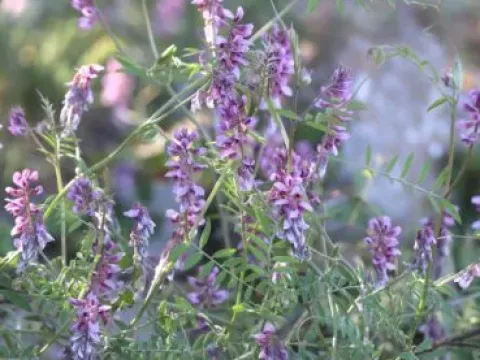
Vicia monardii
Vicia monardii
Vicia monardii is a member of the Fabaceae (Leguminosae) family. As a perennial herbaceous plant, it requires specific conditions for successful seed germination. The optimal time for sowing is early spring, when the soil has warmed up sufficiently and retains enough moisture from snowmelt.
What the section contains
Vicia monardii
When sowing, it is crucial to consider the depth, which typically ranges from 3 to 5 cm depending on the soil structure. Planting too deep in heavy soils can delay emergence and significantly reduce the energy of germination, leading to uneven crop stands.
In agricultural practice, it is sown both in pure stands and in mixtures with grasses to increase structural stability and prevent lodging. Such mixtures allow for improved root system development and enhance soil aeration and organic structure over time.
To ensure high seedling uniformity, seeds may require scarification if they exhibit high levels of seed coat dormancy. This practice significantly increases field germination rates and promotes vigorous early growth during the critical seedling stage.
Post-sowing soil compaction is essential to ensure proper seed-to-soil contact. This step is vital because small seeds require a consistent moisture supply to initiate embryonic development and establish a strong root system before environmental stresses occur.
Vicia monardii thrives in open, well-lit environments as it is a photophilous plant. Excessive shading in dense stands can slow down vegetative growth and reduce the plant's ability to flower, which directly impacts its overall biomass production and nutritional value.
The crop has moderate moisture requirements, showing resilience to short periods of drought. However, for maximum dry matter yield, consistent access to moisture is necessary, particularly during the active stem elongation and budding phases.
Soils for cultivation should ideally have a neutral to slightly alkaline pH. In acidic soils, plant development is often retarded; therefore, liming may be necessary during site preparation to create a favorable environment for nitrogen-fixing nodule bacteria.
The plant demonstrates good winter hardiness, allowing for its adaptation in various climatic zones. It is capable of surviving spring frosts without significant damage to the vegetative parts, enabling the plant to begin early spring growth cycles.
Fertility requirements are moderate. The crop responds well to phosphorus and potassium fertilization, which strengthens root development and supports the accumulation of nutrients within the vegetative organs, leading to higher quality forage.
The yield of Vicia monardii green mass depends heavily on the level of agronomic management and regional climatic conditions. When cultivated under optimal conditions, the plant is capable of producing a high volume of nutrient-dense biomass, rich in protein.
The accumulation of vegetative mass peaks during the flowering phase, which is considered the ideal time for harvesting to ensure the highest protein content. Delaying the harvest results in stem lignification, which decreases the overall digestibility and nutritional value.
A major driver of productivity is the presence of efficient nitrogen-fixing bacteria in the soil. Their symbiotic activity allows the plant to accumulate significant biomass even in soils with lower nitrogen availability, contributing to improved soil fertility.
The primary agricultural use includes hay, haylage production, or green manure applications. Vicia monardii is highly valued in crop rotations for its nitrogen-fixing capabilities and ability to improve soil structure for subsequent demanding crops.
When grown for seed, yield depends significantly on the activity of pollinators. Integrating apiaries near fields can substantially increase the percentage of successful fertilization and, consequently, the final seed harvest yield per hectare.
Fungal diseases, such as anthracnose and various leaf spot pathogens, represent the primary threat to the crop. High humidity and high plant density, which limit air circulation, are the main environmental factors promoting the spread of these infections.
Among pests, weevils and aphids cause the most damage by feeding on foliage and reproductive organs. Regular monitoring of crop health is essential for timely intervention and to prevent significant economic damage to the plant stand.
Integrated Pest Management (IPM) strategies are recommended, including the use of biological controls and strict adherence to crop rotation cycles. Chemical insecticides should be reserved for cases where pest populations exceed the economic threshold.
Weed management is critical during the seedling stage. Vicia monardii grows slowly initially, making it vulnerable to competition from aggressive weeds, which can suppress the crop and lead to a significant decline in final yield and density.
Preventive measures include seed treatment prior to sowing and the selection of fields free from persistent soil-borne pathogens. Maintaining spatial isolation from other legume crops also helps mitigate the risk of cross-infection and pest migration.