
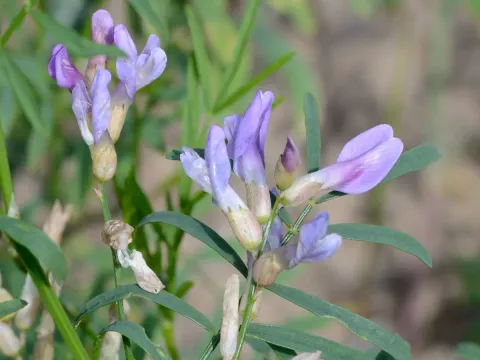
Sand milkvetch
Astragalus arenarius
Sand milkvetch (Astragalus arenarius) is a perennial legume belonging to the Fabaceae family, well-adapted to surviving in nutrient-poor and sandy environmental conditions.
What the section contains
Sand milkvetch
The species is naturally occurring across various European regions, typically found in dry meadows, dunes, and open pine forests where its root system prevents soil erosion.
It requires sandy or gravelly soil types with excellent drainage to flourish, as it cannot withstand waterlogging or heavy, compacted soil structures that impede growth.
The crop is highly drought-tolerant and demonstrates strong cold hardiness, making it an ideal candidate for soil stabilization and rehabilitation projects on degraded land.
Agriculturally, it provides high-quality forage rich in protein and is often utilized as a reliable source of green matter in marginal dry-land farming systems.
Powdery mildew represents a significant fungal challenge, particularly when humidity levels rise and air circulation within the plant canopy becomes restricted.
Root rot pathogens, such as Fusarium species, can cause severe stand depletion if the plants are grown in soils with poor drainage or excess moisture retention.
Weevils are common pests that feed on the foliage and reproductive structures of the plant, potentially causing substantial losses in biomass and seed production yields.
Aphid infestations can occur during peak growing seasons, weakening the plants by sap-feeding and creating stress, which makes them susceptible to secondary infections.
Successful management strategies focus on selecting well-drained sites and ensuring optimal planting density to promote air movement and prevent disease development.