
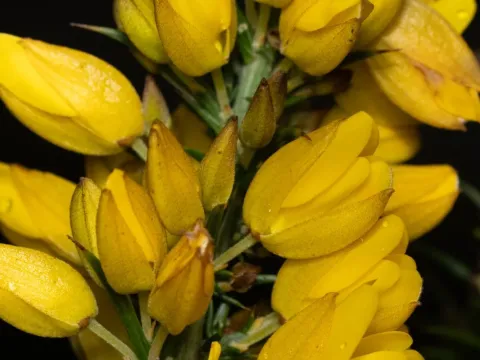
Ulex jussiaei
Ulex jussiaei
Sowing Ulex jussiaei is typically performed in early spring once the soil temperature is consistently above 15 degrees Celsius. The seeds possess a hard coat, so mechanical or chemical scarification is necessary to improve germination rates.
What the section contains
Ulex jussiaei
Seeds should be sown at a depth of 1 to 2 centimeters in well-prepared, loose soil. Maintaining consistent soil moisture during the initial two weeks after sowing is crucial for successful establishment.
For greenhouse or nursery production, using specialized propagation trays is recommended. This controlled environment allows for precise regulation of soil moisture and temperature, which significantly increases the survival rate of seedlings.
Vegetative propagation via semi-hardwood cuttings is an efficient alternative to sowing. Cuttings are harvested during the late summer months, treated with rooting hormones, and placed in a sand-peat mixture.
During the early stages of growth, seedlings must be protected from extreme weather conditions. Providing moderate shade and shelter from strong winds helps the young plants develop robust root systems.
Ulex jussiaei belongs to the Fabaceae family and thrives in open, sunny locations with excellent drainage. It is highly adapted to nutrient-poor soils, demonstrating strong resilience to various environmental stresses.
This shrub prefers slightly acidic to neutral soil pH levels. While it tolerates drought exceptionally well once established, it requires regular moisture to maintain optimal growth during its juvenile stages.
The plant is sensitive to waterlogged conditions, which can lead to rapid root decay. Therefore, incorporating coarse sand or small gravel into the planting medium is highly recommended for sites with heavy soil.
In terms of climatic requirements, Ulex jussiaei prefers mild temperate conditions. Although it is relatively hardy, mature plants perform best in zones where they are protected from prolonged severe frost and ice accumulation.
Regular maintenance involves light pruning to encourage denser branching and prevent the plant from becoming overly woody. This practice also improves airflow within the shrub, reducing the risk of disease.
As a legume, Ulex jussiaei provides significant agronomic value through its nitrogen-fixing capabilities. It effectively enhances soil fertility, making it a valuable candidate for green manure and sustainable farming practices.
The plant is highly regarded as a productive nectar source for pollinators, particularly honeybees. During the flowering period, it supports local biodiversity and improves the overall productivity of nearby insect-pollinated crops.
The biomass generated by this shrub can be composted or used as a soil mulch. This organic matter helps improve soil structure and long-term water retention in arid or sandy agricultural plots.
Yield metrics for this culture are focused on biomass production rather than food harvest. With proper management, the shrub can produce a substantial amount of organic matter annually.
Its role as a protective hedge or windbreak further adds to its agricultural utility. By reducing wind erosion, the plant helps preserve the topsoil of larger fields, increasing the overall farm output.
The primary threats to Ulex jussiaei include fungal diseases such as leaf spot and mildew, which thrive in humid conditions. Ensuring adequate spacing between plants is essential for maintaining plant health.
Aphids are common pests that attack the soft, tender growth of new shoots. Early detection and the application of mild insecticidal soaps are usually sufficient to control infestation and prevent damage.
Spider mites can become a severe problem during periods of intense heat and low humidity. Monitoring the underside of leaves for fine webbing is a vital part of the pest management routine.
Root rot is the most serious threat caused by improper water management. If the soil remains saturated for extended periods, the root system will inevitably fail, leading to the rapid decline of the plant.
Regular inspection of the foliage and stems helps identify potential disease outbreaks before they spread. Maintaining a clean cultivation area free of debris helps minimize the survival of pathogens.