
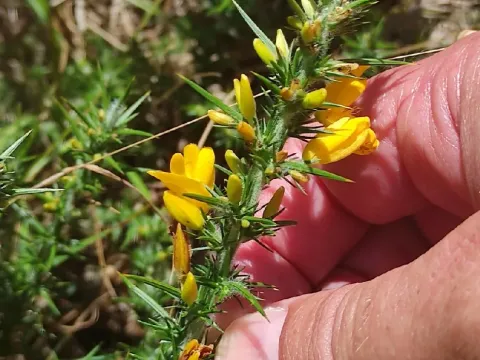
Ulex breoganii
Ulex breoganii
Sowing Ulex breoganii is typically conducted in the spring when soil temperatures stabilize around 10 to 12 degrees Celsius. The seeds possess a hard coat, requiring scarification to ensure uniform germination and moisture uptake prior to planting.
What the section contains
Ulex breoganii
For industrial cultivation, transplanting seedlings is preferred over direct seeding to ensure optimal spacing and establishment. Seedlings should be placed in well-prepared trenches, maintaining a spacing of 1.5 to 2 meters between rows to allow for future maintenance.
During the initial growth stages, seedlings are vulnerable to competition from invasive weeds. Protecting the young plants until their root systems are well-established is crucial for long-term survival and vigor.
Once established, the plants exhibit rapid growth and minimal sensitivity to moisture fluctuations. Sowing areas should be protected from harsh winds to prevent mechanical damage to tender shoots during the first year of growth.
The planting density is determined by the intended use of the crop, whether for ecological restoration, living fences, or biomass harvesting. Lower density is recommended for pasture use, whereas higher density is ideal for fuel-wood or biomass production.
Ulex breoganii is a member of the Fabaceae family and is native to Atlantic coastal regions. As a hardy, evergreen, and spiny shrub, it is uniquely adapted to thrive in nutrient-poor, acidic, and rocky soils where traditional crops often fail.
The plant benefits from a symbiotic relationship with nitrogen-fixing bacteria, which enhances soil fertility over time. This makes it a valuable species for re-greening degraded landscapes and improving soil structure without heavy fertilizer inputs.
Climatic requirements favor areas with mild winters and high atmospheric humidity. While the plant can tolerate light frost, prolonged exposure to sub-zero temperatures can lead to shoot dieback, necessitating careful site selection.
Effective drainage is a critical requirement for this species. Although it is moisture-loving, waterlogged soils lead to root rot; therefore, planting on slopes or well-drained substrates is highly recommended for optimal development.
Sunlight is vital for the health and density of the shrub. Shade-grown plants tend to become sparse and less productive, while full sun exposure promotes dense branching and frequent flowering, which are hallmarks of a healthy Ulex stand.
The yield of Ulex breoganii is assessed based on the production of aerial biomass. Through periodic harvesting or coppicing, the plant can be managed to provide consistent yields of woody material over a long period, typically spanning over a decade.
In agriculture, the processed foliage serves as an emergency fodder source for livestock. Due to its protein content, it is a nutritional asset, provided that the spiny parts are mechanically processed to ensure palatability and safety for animals.
As a renewable energy source, the biomass is highly efficient. The species provides a consistent supply of woody material that can be harvested in cycles, making it a sustainable choice for localized fuel production.
Yield stability is improved with age, as the mature root system effectively draws nutrients and water from deeper soil horizons. This longevity minimizes the need for frequent replanting, thereby reducing operational costs over the life of the stand.
Harvesting efficiency is largely dependent on the machinery used. When managed correctly, the productivity of this crop on marginal land significantly outperforms many traditional grasses that require higher soil quality.
The primary threats to Ulex breoganii include fungal infections that thrive in stagnant, humid environments. Poor air circulation within the shrub canopy can facilitate the spread of these pathogens, potentially weakening the entire stand.
Pests, particularly mites and specific insect species that target buds, can reduce biomass increments during the growing season. Early spring monitoring is essential to prevent significant infestations that may stunt plant development.
Sanitation is the best defense against disease. Regularly removing dead or diseased branches allows for better airflow and helps maintain the overall health of the shrubs, significantly reducing the impact of potential outbreaks.
Chemical intervention is rarely required due to the plant's inherent resilience. Agronomic practices, such as proper spacing and site selection, are generally sufficient to manage health risks without resorting to pesticides.
Weed competition is only a significant threat during the seedling stage. Once the spiny canopy develops, the shrub effectively outcompetes most other vegetation, asserting itself as the dominant species in the area.