
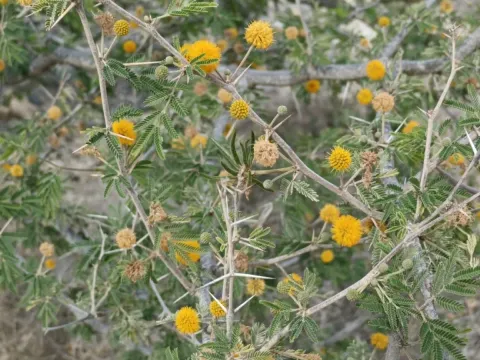
Vachellia
Vachellia Wight & Arn.
Vachellia seeds possess a hard, impermeable seed coat that necessitates scarification before sowing to ensure uniform and rapid germination.
What the section contains


Vachellia
The optimal sowing time is during the early spring or the start of the wet season, ensuring that soil temperatures remain consistently above 20 degrees Celsius.
Seeds should be planted at a shallow depth of 1 to 2 centimeters in a well-prepared seedbed that provides adequate aeration for developing roots.
In modern agricultural practices, nursery propagation using biodegradable containers is preferred to minimize root disturbance during transplanting.
Proper spacing between seedlings is essential, depending on the final usage of the plantation, whether for soil stabilization or commercial resin production.
Vachellia trees require full, direct sunlight throughout the day to achieve optimal metabolic rates and maximize the production of secondary metabolites.
The plant thrives in a variety of soil types, including sandy, stony, or alkaline soils, provided that the drainage remains excellent to prevent waterlogging.
High drought tolerance is a hallmark of this genus, enabled by a deep-reaching taproot system capable of accessing water stored in deep soil horizons.
Temperature requirements are demanding, as the plant prefers tropical or sub-tropical climates and generally suffers damage under prolonged frost conditions.
Maintenance involves periodic weeding around the base of the trees to ensure the young saplings do not compete for nutrients or soil moisture during their establishment.
The primary economic output of many Vachellia species is the production of gum arabic, harvested through a controlled tapping process on the tree bark.
Yields of resin increase with the age of the tree and are significantly influenced by local environmental conditions and the intensity of the harvesting schedule.
The foliage provides a high-protein fodder source, which is critically important for livestock management in semi-arid and arid agricultural regions.
Timber production is an additional yield, with the wood prized for its density, hardness, and natural resistance to decay in various construction applications.
Selective breeding programs aim to enhance both the quantity of resin secretion and the overall growth rate of trees, aiming for higher productivity per hectare.
Root rot pathogens represent the most significant threat, particularly in poorly drained soils or areas subjected to excessive and irregular irrigation practices.
Leaf-eating insect larvae can cause massive defoliation, significantly reducing the tree's photosynthetic capacity and lowering overall vigor.
Mealybugs are common pests that infest the tender shoots and twigs, creating sticky residue that encourages the growth of sooty mold and weakens the plant.
Bark necrosis can occur if tapping for resin is performed incorrectly, leaving the tree susceptible to secondary infections by fungi and wood-boring insects.
Integrated pest management strategies involve regular field monitoring and the use of targeted biological controls to maintain the health of the plantation.
Resin harvesting is a manual process that involves making specific incisions in the bark to stimulate the tree to produce gum as a defense mechanism.
Seed harvesting occurs when the pods reach full physiological maturity and start to naturally crack open, indicating the end of the reproductive cycle.
Timber harvesting is conducted through sustainable logging practices, targeting mature trees that have reached their peak growth cycle for commercial use.
Post-harvest processing involves cleaning the resin, grading it based on color and purity, and ensuring proper moisture control before long-term storage.
Efficient harvesting techniques are vital to prolonging the lifespan of the Vachellia trees, ensuring consistent output over several decades of production.