
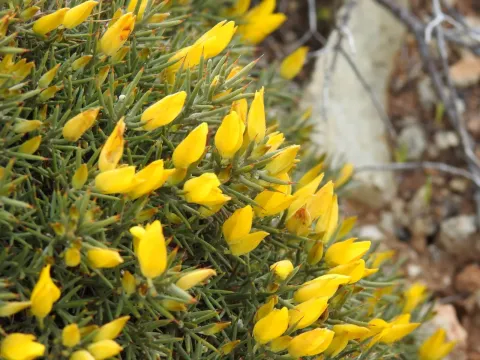
Ulex erinaceus
Ulex erinaceus
The sowing of Ulex erinaceus is typically performed in early spring once the soil temperature is consistently above 15 degrees Celsius. Seeds possess a hard outer coat, necessitating scarification to improve germination rates significantly.
What the section contains
Ulex erinaceus
Seeds should be planted at a shallow depth of 1–2 centimeters. Consistent but moderate moisture is essential during the initial weeks to ensure successful germination without causing seed decay due to waterlogging.
For specialized horticultural use, raising seedlings in containers is recommended to ensure strong root development before transplanting into the field. This method also protects young plants from environmental stresses.
When establishing hedges or protective barriers, a spacing of 40–50 centimeters between plants is recommended to create a dense, impenetrable structure as they mature.
Transplanting should ideally occur during cooler periods, such as early autumn or spring, to allow roots to establish firmly in the native soil before the onset of extreme seasonal temperatures.
Ulex erinaceus belongs to the Fabaceae family and is recognized as a drought-tolerant shrub adapted to harsh, dry environments. It thrives best in full sun exposure, which is necessary for dense growth and prolific flowering.
The plant prefers light, sandy, or well-drained loamy soils. Good drainage is non-negotiable, as heavy or waterlogged soils often lead to root infections and premature plant decline.
Being a nitrogen-fixing legume, the plant does not require high levels of nitrogen fertilizer. It performs well even in low-fertility soils, making it an excellent candidate for reclamation projects.
The species demonstrates significant tolerance to wind and mild frost, though protection may be required in extremely cold climates to prevent severe dieback of terminal branches.
Minimal pruning is needed to maintain its shape, but annual removal of dead wood and damaged branches encourages vigorous growth and sustains the aesthetic appeal of the shrub.
Ulex erinaceus is primarily valued for its protective functions, including the creation of living fences and windbreaks that effectively reduce soil erosion on slopes and exposed fields.
Its role as a nitrogen fixer makes it an important plant for improving soil health, as it enriches the surrounding substrate with organic nitrogen through its root nodules.
The ornamental yield of the plant is seen in its vibrant, dense flowering period, which provides significant visual value in garden landscapes and improves biodiversity in the surrounding area.
While not a major commercial food crop, its biomass can serve as a source of organic mulch, aiding in soil moisture retention and weed suppression when managed appropriately.
Productivity in terms of biomass can be optimized by strategic pruning, which prevents the plant from becoming too woody at the base and stimulates fresh, leafy growth annually.
Root rot is the most common pathology, usually triggered by poor soil aeration or excess irrigation. Ensuring the planting site has excellent drainage is the primary defense strategy.
Insect pests such as aphids and spider mites can occasionally affect the plant during hot, dry spells, necessitating regular monitoring of the foliage to catch infestations early.
Powdery mildew may develop in poorly ventilated or excessively crowded conditions, requiring proper spacing during planting to allow for sufficient airflow between individual bushes.
Biological control agents are preferred over synthetic pesticides to maintain the ecological balance of the plantation and protect local pollinators that visit the flowers.
Sanitation practices, including the removal and destruction of infected plant debris, are crucial for preventing the spread of fungal spores across the field or garden area.