
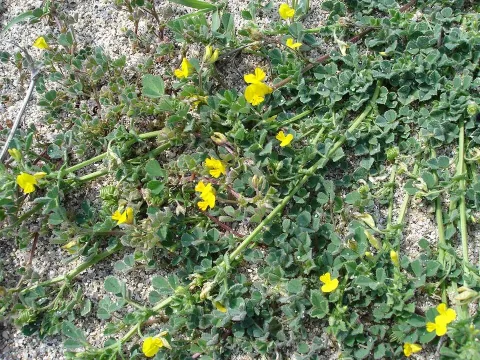
Underground medic
Medicago hypogaea
Sowing of the underground medic is carried out primarily in the spring, once soil temperatures reach 10–12°C. It is essential to ensure high-quality pre-sowing soil preparation to create a fine-crumb structure, which facilitates better seed-to-soil contact.
What the section contains
Underground medic
The sowing depth should range from 1.5 to 3 centimeters, depending on the mechanical composition of the soil. Sowing too deep may lead to delayed germination or the death of seedlings due to insufficient energy to break through the soil surface.
The seeding rate is calculated based on seed viability and the intended plant density, averaging 12–15 kg per hectare. Using high-quality, impurity-free seed material is key to obtaining uniform and vigorous initial growth.
Rolling the soil immediately after sowing is recommended to accelerate seedling emergence. This action promotes capillary moisture rise to the seeds and creates optimal conditions for the initiation of vegetation.
In regions with a distinct summer dormancy period, winter sowing is possible, though this requires precise timing to ensure seeds do not germinate prematurely before the onset of frost.
The underground medic belongs to the Fabaceae family and is a unique plant displaying geocarpy. Its natural range encompasses arid regions where the plant has successfully adapted to water scarcity.
The plant has moderate soil fertility requirements, preferring light sandy or loamy soils with good aeration. Water stagnation and high soil acidity significantly hinder the development of the root system and symbiotic microflora.
The crop requires intense solar radiation for optimal growth. It possesses a high degree of drought resistance, making it a promising candidate for cultivation in hot and dry climates where other legumes might suffer.
Temperature during the active growth phase should be consistently moderate to hot. The underground medic is sensitive to sudden temperature fluctuations and early autumn frosts, which can damage vegetative plant organs.
A specific feature of this species is the formation of pods underground, requiring a certain degree of soil looseness during the flowering period. This allows the flowers and ovaries to penetrate the substrate for successful seed maturation.
Yields of the underground medic depend heavily on the climatic conditions of a given season, especially rainfall during critical growth stages. In favorable years, the crop can generate significant biomass suitable for forage.
Average green mass yields vary widely because the plant directs a significant portion of its energy toward the underground development of reproductive organs. This limits the crop's use solely as a hay-producing plant.
Economic efficiency is often evaluated by the combination of above-ground biomass and the nutritional value of the underground seeds. Harvesting is complicated by the necessity of extracting the pods from the soil.
Using intensive cultivation technologies with balanced micronutrient fertilization can increase productivity by 15–20%. The presence of nitrogen-fixing bacteria is a vital factor for natural yield enhancement.
Yield stability is largely dependent on strict crop rotation. It is not recommended to return the crop to the same field sooner than every 4–5 years to prevent the accumulation of soil-borne pathogens.
The main pests for the underground medic are soil insects that damage the underground pods during their formation. These include wireworms and larvae of various cutworm species, which can significantly reduce seed quality.
The above-ground parts are often infested by aphids, which suck sap from young shoots, causing deformation and reducing photosynthetic activity. Environmentally safe insecticides are used to control pest populations.
Fungal diseases, such as Fusarium wilt and various rots, affect the crop under conditions of excessive moisture or improper agricultural management, leading to plant wilting and root neck damage.
Powdery mildew can spread in conditions of high air humidity and moderate temperatures. This disease manifests as a characteristic white coating on the leaves, which inhibits the normal photosynthetic process.
To minimize phytosanitary risks, it is recommended to use resistant cultivars and maintain spatial isolation from other legume crops. Regular monitoring allows for timely protective interventions.
Harvesting the underground medic is a complex process combining traditional mowing of above-ground biomass and mechanical extraction of the underground pods. Specialized equipment equipped with soil-working tools is required.
The optimal harvest time is determined by the state of the underground pods, which must reach full maturity. This usually coincides with the period when the above-ground part begins to naturally wither and the pods acquire their characteristic color.
After extraction, the pods require immediate cleaning from soil impurities and root residue. This is critical to prevent crop spoilage and mold development during storage.
Seed drying should be performed in well-ventilated areas or specialized dryers at controlled temperatures. Overheating can lead to a loss of seed viability, which is unacceptable for seed production.
Storage is carried out in dry, dark facilities with limited moisture access. Under proper conditions, the seeds maintain viability for several years, allowing for the creation of insurance stocks.