
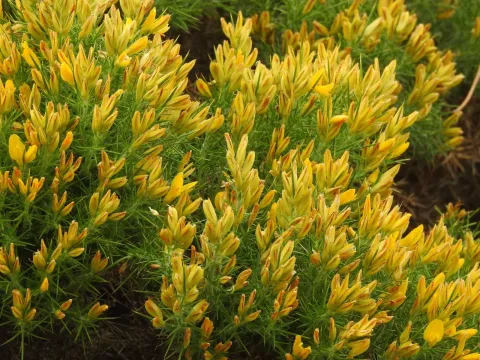
Ulex densus
Ulex densus
Sowing Ulex densus is best performed in early spring or autumn to take advantage of natural temperature fluctuations that aid seed germination.
What the section contains
Ulex densus
The seeds are protected by a hard coat, so scarification or soaking in warm water for several hours is recommended to improve emergence rates.
Seeds should be sown at a shallow depth of about 1 to 2 centimeters in a well-draining, sandy or loamy growing medium.
Maintain consistent moisture during the germination phase but ensure that the soil is not waterlogged to prevent seed rot.
Once seedlings have developed several true leaves, they can be hardened off and transplanted to their final location in the field or garden.
Ulex densus is a member of the Fabaceae (legume) family, well-known for its ability to fix atmospheric nitrogen and improve soil quality.
The plant thrives in sunny environments with full exposure, as shade tends to weaken the structure and overall vitality of the shrub.
It prefers well-drained, slightly acidic, and impoverished soils where it can easily establish its root system without competition.
This species is highly drought-tolerant, making it an excellent candidate for regions with limited irrigation resources or rocky terrain.
Soil management should focus on maintaining adequate drainage, as the plant is susceptible to root damage in heavy, water-retaining soils.
In agricultural settings, Ulex densus is primarily utilized for land reclamation, slope stabilization, and as a natural windbreak.
The biomass produced by this plant serves as a beneficial green manure, enriching the soil with nitrogen-rich organic matter upon decomposition.
Productivity is measured by the plant's density and its capacity to inhibit weed growth in its immediate vicinity, acting as a natural ground cover.
Its longevity allows for multiple years of soil protection and organic nitrogen input without the need for constant replanting or chemical fertilizers.
When used in managed landscapes, the yield also includes ornamental benefits due to its dense, persistent foliage and bright yellow flowers.
The main threats to Ulex densus include fungal infections such as rust or mildew, which typically appear in humid and poorly ventilated conditions.
Pests such as aphids or spider mites can occasionally infest the plant, particularly during hot and dry spells, leading to stunted shoot growth.
Effective management includes regular monitoring and the use of targeted biological controls or appropriate organic pesticides when necessary.
Prevention is centered on site selection, ensuring that the shrubs have sufficient space and air circulation to keep foliage dry.
Root health is crucial, so avoiding overwatering is the primary defense against pathogens that target the subterranean parts of the plant.
Harvesting seeds requires careful timing, as the pods are prone to dehiscing (bursting open) once they are fully dry and mature.
The pods should be gathered just before they dry completely, or placed in bags to collect any seeds that are released during the drying process.
After collection, the seeds must be thoroughly dried in a shaded, airy location to prevent spoilage and maintain long-term viability.
Cleaned seeds should be stored in breathable containers in a cool, dry place until the next planting season to ensure maximum success.
In landscaping, post-flowering pruning can be considered a harvest of vegetative material that encourages a bushier, healthier plant form.