
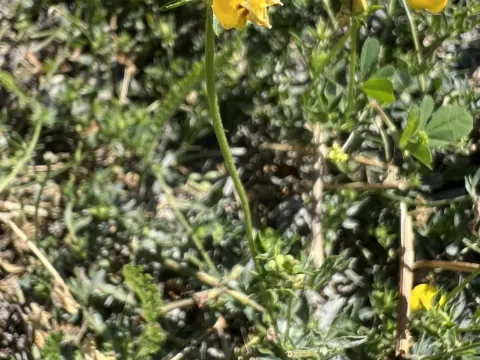
Ukrainian bird's-foot trefoil
Lotus ucrainicus
Ukrainian bird's-foot trefoil is a perennial legume that thrives when planted in early spring. The optimal time for sowing is when soil temperatures reach 5-8 degrees Celsius, ensuring favorable conditions for seed germination and initial establishment.
What the section contains
Ukrainian bird's-foot trefoil
Because the seeds possess a hard seed coat, scarification is a highly recommended practice before planting. This mechanical or chemical treatment helps break dormancy, significantly improving the germination rate and resulting in a denser and more uniform crop stand.
The standard seeding rate usually ranges between 10 to 12 kilograms per hectare for solid seeding methods. Precision in spreading the seeds is crucial to avoid overcrowding or large gaps, ensuring that the plant can fully develop its root system and foliage.
Seed depth should be carefully adjusted based on soil texture and moisture content. For light, sandy soils, a depth of 2-3 centimeters is sufficient, while in heavier, clay-rich soils, a shallower depth of 1-2 centimeters is preferred to prevent burying the small seeds too deeply.
Often used in mixtures with perennial grasses like timothy or brome, the seeding rate should be balanced to accommodate competition between species. This integration creates a robust forage base that provides high nutritional value throughout the growing season.
This species is well-regarded for its exceptional environmental adaptability. It can grow on a wide variety of soil types, including those considered too acidic, saline, or nutritionally poor for more demanding legumes like alfalfa or red clover.
Lotus ucrainicus is famous for its drought resistance. Its deep, well-developed taproot system allows it to access water deep within the soil profile, ensuring it remains productive and green even during extended periods of low rainfall in summer.
Winter hardiness is a major advantage of this crop, allowing it to survive harsh winters with significant temperature drops. The plant displays strong regrowth capabilities in early spring, often being one of the first legumes to provide forage after snowmelt.
While it prefers full sun for maximum biomass production, it exhibits moderate tolerance for varying light conditions. However, to achieve peak photosynthesis rates, it is best planted in open fields where it does not face significant competition for sunlight.
The plant also demonstrates tolerance to periodic waterlogging, which is a rare trait among many legumes. This allows it to be used effectively in low-lying meadow areas that are prone to temporary flooding during the spring thaw.
The yield of this legume varies depending on local environmental conditions and management practices. On average, farmers can expect a green mass yield of approximately 150 to 250 centners per hectare, depending on soil fertility and rainfall levels.
As a hay crop, it provides a stable yield of high-quality forage, typically ranging from 35 to 50 centners per hectare. The nutritional quality of the hay remains excellent even if harvested later in the season compared to other common legumes.
Seed production is an important commercial aspect of this crop, with yields ranging from 3 to 6 centners per hectare. Effective pollination by bees is essential to maximize the number of seed pods and the overall harvest volume.
The longevity of the stand is a significant economic benefit. When managed correctly, a well-established stand can remain productive for 5 to 8 years, reducing the frequency of field tillage and re-seeding costs for the agricultural producer.
By fixing atmospheric nitrogen through a symbiotic relationship with rhizobia bacteria, the plant improves soil structure and fertility. This nitrogen-enriching effect provides a lasting benefit to the soil, boosting the yield of future cereal crops.
Ukrainian bird's-foot trefoil is relatively resilient to many common plant diseases. However, in regions with high humidity and stagnant air, powdery mildew can occasionally manifest, requiring careful monitoring of stand density to improve airflow.
Root rot can be a challenge on fields with poor drainage where water remains on the soil surface for long periods. Proper land preparation and avoiding overly compacted soils are the primary defensive strategies against these soil-borne pathogens.
Pests such as weevils, particularly clover seed weevils, can occasionally cause damage to the foliage and reproductive structures. Integrated pest management practices, such as timely harvesting or biological controls, are effective ways to mitigate potential yield losses.
Aphid infestations may occur during the budding phase, which can stunt the growth of young shoots. Regular field scouting during the spring allows farmers to detect pest pressure early and apply necessary measures before significant damage occurs.
To ensure long-term health and productivity, crop rotation remains the most effective defense against disease buildup. It is recommended to leave a gap of at least 3-4 years before planting the same site with legumes again to break the lifecycle of specific pathogens.