
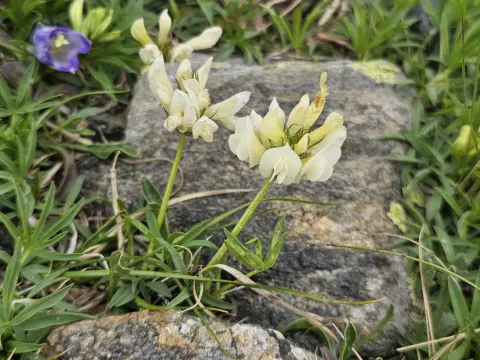
Multi-leaved clover
Trifolium polyphyllum
Multi-leaved clover (Trifolium polyphyllum) is a perennial herbaceous plant belonging to the Fabaceae family. Native to high-altitude regions such as the Caucasus and parts of Asia Minor, this species has evolved to thrive in alpine and subalpine environments characterized by harsh winters and short, intensive growing seasons.
What the section contains
Multi-leaved clover
Botanically, Trifolium polyphyllum is distinguished by its complex leaf structure and robust root system, which helps it stabilize slopes and prevent soil erosion. As a legume, it plays a critical role in nitrogen fixation, enriching the soil with nutrients and supporting the overall health of the ecosystem.
Regarding cultivation requirements, the plant prefers well-drained, porous soils with a neutral or slightly acidic pH level. It shows high sensitivity to waterlogging and soil compaction, which can negatively impact the development of its root nodules and overall biomass production in agricultural settings.
Climatically, the species is highly adapted to cooler temperatures and exhibits strong frost resistance. However, when introduced to lower elevations for agricultural purposes, it requires consistent moisture throughout the growing period to maintain productivity and prevent premature drying of the foliage.
The primary agricultural use of multi-leaved clover is as a high-quality forage crop for grazing livestock and hay production. Its dense nutritional profile, rich in proteins and essential minerals, makes it a vital resource for livestock farmers, particularly in areas where traditional grass species struggle to provide sufficient nutrient density.