
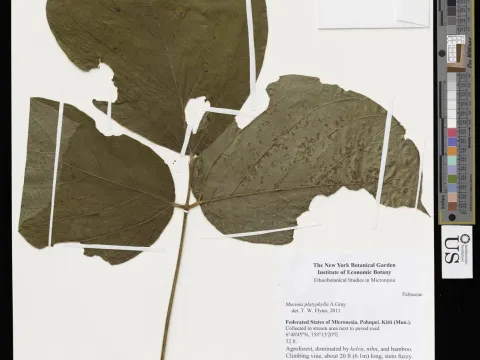
Mucuna platyphylla
Mucuna platyphylla
Mucuna platyphylla is a heat-loving tropical vine from the Fabaceae family. Sowing is carried out only after the soil has warmed up to at least 20-22°C.
What the section contains
Mucuna platyphylla
In regions with a distinct tropical climate, sowing is done at the beginning of the rainy season, which provides optimal moisture for seed germination.
When using the crop as a green manure, a nest-sowing method is practiced with a distance of up to one meter between holes to allow for biomass expansion.
Seeds do not require deep planting; burying them 3–5 cm deep in loose soil is sufficient to prevent rotting due to excessive moisture.
Given the crop's high growth energy, it is important to observe sowing deadlines so the plant can accumulate vegetative mass before the natural dormancy period.
The plant shows exceptional resistance to adverse conditions, including temporary drought, but prefers well-lit areas for optimal development.
Mucuna platyphylla performs best in light, well-drained loamy soils where there is no waterlogging, which is detrimental to the root system.
The crop is extremely demanding regarding heat and cannot tolerate even short-term frost, limiting its cultivation area to tropical and subtropical zones.
An important success factor is the availability of natural supports or space for trailing growth, as the plant actively uses its long stems to claim territory.
The soil should be sufficiently rich in nitrogen, but the culture itself is an excellent nitrogen fixer, enriching the ground through symbiosis with nodule bacteria.
Mucuna platyphylla is valued for its incredibly high green mass productivity, which can reach dozens of tons per hectare in a single growing season.
Most of the harvest is formed by vegetative organs capable of suppressing weed vegetation due to dense coverage of the soil surface.
When used as a forage crop, seed yield depends on the duration of daylight and the presence of pollinators during the flowering period.
Maximum biomass indicators are achieved with intensive moisture during the mid-vegetation period, allowing for multiple cuttings if necessary.
The economic efficiency of the crop is determined not only by the harvest mass but also by significant improvements in soil structure, boosting the yield of subsequent crops.
Unlike many other legumes, Mucuna is characterized by high resistance to diseases due to the presence of secondary metabolites in its tissues.
The main danger at a young age is posed by soil pests, such as grubs or wireworms, which damage the roots during germination.
Under conditions of high humidity, fungal infections like powdery mildew or root rots may occur if agricultural practices are violated.
Insect pests rarely cause critical damage to adult plants, as the tough leaf structure and presence of fine hairs create a natural barrier.
To minimize risks, it is recommended to follow crop rotation principles and avoid monoculture cultivation on the same plot for several consecutive years.
Green mass is harvested at the onset of flowering, when nutrient concentration in the leaves reaches its peak before active pod formation.
If the cultivation goal is seed production, harvesting is carried out after the pods have turned a dark color and have begun to dry on the vine.
When using mechanized harvesting, it is crucial to use equipment capable of handling large masses of intertwined vines to avoid clogging the machinery.
After mowing, the green mass is often left directly on the field as mulch, contributing to the rapid accumulation of organic matter in the soil.
Seed material requires thorough drying in well-ventilated areas to prevent mold development within the dense beans during storage.