
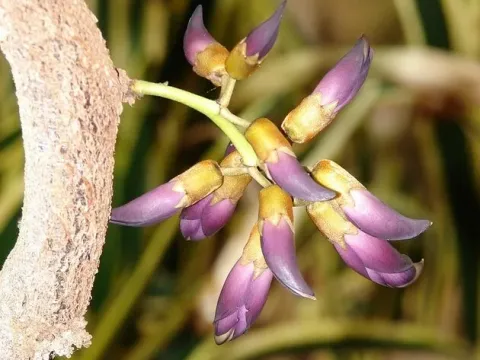
Mucuna nigricans
Mucuna nigricans
Mucuna nigricans is a vigorous leguminous vine that requires specific sowing techniques for optimal establishment. It is best sown at the beginning of the rainy season when soil temperatures are conducive to rapid germination.
What the section contains
Mucuna nigricans
The seeds should be planted in well-prepared soil, typically in clusters or rows. Given the plant's aggressive growth habit, sufficient spacing must be maintained to allow for proper canopy development.
Pre-soaking seeds in water for several hours can significantly accelerate germination rates. In tropical climates, the crop germinates quickly and begins to cover the soil within a few weeks of emergence.
Selecting a field free from perennial weeds is recommended, although the plant is known for its strong competitive ability against most weeds. It is essential to ensure that the site has adequate access to sunlight.
Planting depth should be approximately 3 to 5 centimeters. Under favorable moisture conditions, seedlings usually emerge within 7 to 10 days, showing rapid initial growth.
This species thrives in warm, tropical climates and is highly sensitive to frost. Consistent temperatures and high humidity are necessary for the plant to achieve its full potential in biomass production.
The plant prefers well-drained, sandy loam or clay soils. While it can withstand occasional waterlogging, prolonged stagnant water can lead to root rot and other fungal complications.
As a legume, it forms a symbiotic relationship with nitrogen-fixing bacteria, significantly improving soil fertility. This makes it a preferred choice for sustainable agricultural practices and crop rotation.
The vine benefits from having an artificial or natural support structure, though it is frequently grown as a soil-covering mat. Sufficient light is vital for flowering and successful pod formation.
Soil nutrient levels, particularly phosphorus, should be monitored to ensure optimal growth. However, the plant is relatively undemanding and performs well even on soils with limited nutrient profiles.
Mucuna nigricans is highly valued for its massive vegetative output, often producing up to 40 tons of green matter per hectare. This organic matter is excellent for building soil structure.
Seed yields are influenced by the length of the growing season and the stability of climatic conditions. Consistent management allows for a productive seed harvest for future planting cycles.
The leaves and vines serve as a nutritious forage source for livestock, contributing high levels of crude protein to their diet. It is an effective component in integrated farming systems.
The nitrogen-rich biomass acts as a powerful natural fertilizer when incorporated into the soil. Farmers often use it to reduce dependence on synthetic nitrogen fertilizers, enhancing soil health.
Weed suppression is a significant economic benefit, as the dense cover crop eliminates the need for manual weeding or frequent herbicide application during the growing cycle.
Fungal diseases, such as leaf spot and mildew, can occur in environments with high humidity and poor airflow. Managing plant density is a key preventative strategy against these issues.
Insect pests, specifically lepidopteran larvae, can cause damage to the foliage. Integrated pest management, focusing on biological controls, is usually sufficient to mitigate these threats.
Root-knot nematodes may present a challenge in long-term monocultures. Implementing crop rotation with non-leguminous plants is the most effective method for managing soil-borne pathogens.
Early-stage seedling protection is necessary as aphids may cause viral issues that stunt plant growth. Regular monitoring of the field helps in early identification of pest pressures.
Post-harvest pests, such as beetles, can damage stored seeds. Proper drying, cleaning, and storage in cool, dry conditions are essential to maintaining seed viability for future use.
Harvesting green manure is typically performed during the peak flowering stage when nitrogen concentration in the plant tissues is at its maximum. This provides the most benefit to the soil.
Seed harvesting should occur once the pods have darkened, indicating maturity. Timing is crucial to prevent premature pod shattering and seed loss in the field.
For mechanized farming, grain combines can be adjusted to handle the vine mass during harvest. In smaller operations, manual cutting and pod drying on tarps are common practices.
Once harvested, seeds must be thoroughly dried to a moisture content of around 12-14% to prevent mold growth. This ensures long-term storage capability without loss of quality.
The residue left in the field after seed harvest should be mulched or incorporated back into the soil, completing the nutrient cycle and adding beneficial organic matter to the land.