
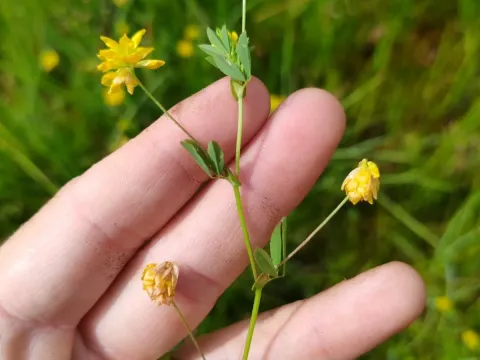
Large hop clover
Trifolium patens
As an annual legume, large hop clover requires proper soil preparation and timely sowing in early spring when the soil temperature consistently reaches 8-10 degrees Celsius.
What the section contains
Large hop clover
Seeds should be sown at a shallow depth of 1-2 centimeters, as they are small and require sufficient moisture to initiate the germination process successfully.
The seeding rate must be balanced to ensure a dense stand that can naturally suppress weed competition during the critical early growth stages.
Rolling the soil immediately after planting is a recommended agronomic practice to improve soil-seed contact and ensure uniform moisture supply.
Strategic timing of sowing is essential when including this species in complex pasture mixtures to ensure compatibility with the growth cycles of companion grasses.
The crop performs best in well-drained, moderately fertile soils and thrives under conditions of consistent, balanced soil moisture throughout the season.
A neutral to slightly acidic soil pH is ideal for promoting nitrogen fixation, which is facilitated by symbiotic bacteria residing in the plant's root nodules.
While the plant is adaptable to various environments, it prefers open, sunny areas and does not respond well to heavy shade or prolonged waterlogged conditions.
Adequate levels of phosphorus and potassium are crucial for root development and overall plant vigor, which directly impact the crop's yield potential.
Climatic stability, especially regarding temperature during the flowering stage, is vital to ensure proper pollination and subsequent seed set.
The yield of large hop clover is primarily driven by soil fertility levels and the effectiveness of nutrient management programs applied during the early growth phase.
This crop is highly valued for its high protein content and digestibility, making it an excellent source of green forage for various livestock species.
Under optimal management, the biomass production can be significant, providing a high yield of dry matter per hectare in a single growing season.
Seed production yields are highly dependent on the activity of pollinators and the prevention of damage to the floral parts during the reproductive phase.
The nutritional profile of the harvested material is at its peak when the plant is harvested at the onset of the flowering stage.
Root-feeding insects and various weevil species pose a threat to both young seedling stands and mature plants, potentially reducing overall plant health.
Fungal pathogens such as anthracnose and various leaf spot diseases are common, particularly in seasons characterized by high humidity and frequent rainfall.
Aphid infestations can stress the plants, leading to reduced vigor and acting as potential vectors for various viral diseases common in legume crops.
Powdery mildew may occur during warmer, drier periods, affecting the quality of the foliage and reducing the total biomass harvested for forage.
- Integrated Pest Management (IPM) to monitor and control insect populations.
- Crop rotation strategies to break disease cycles within the fields.
- Using treated seeds to ensure a healthy start for the emerging crop.
For high-quality forage, the crop should be harvested at the early flowering stage to capture the maximum balance of proteins and carbohydrates.
Effective drying techniques are required when producing hay to retain leaf attachment, as the leaves are the most nutrient-dense part of the plant.
Seed harvesting should be performed when the heads have matured and are sufficiently dry, typically indicated by a change in color and seed hardness.
Equipment calibration is essential to minimize harvest losses and ensure that the delicate seeds are recovered efficiently without excessive damage.
Post-harvest residues can serve as green manure, providing a valuable source of organic nitrogen to the soil for subsequent rotational crops.