
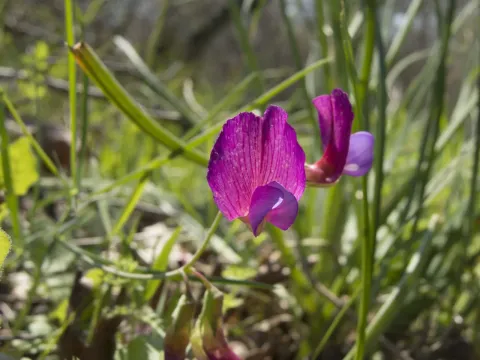
Lathyrus digitatus
Lathyrus digitatus
Lathyrus digitatus is a perennial legume species belonging to the Fabaceae family. It is known for its distinctively shaped foliage and its ability to adapt to diverse ecological conditions, making it an interesting subject for agricultural study.
What the section contains
Lathyrus digitatus
Native to the Mediterranean region and parts of the Balkan Peninsula, this plant thrives in open, sunny environments. It is naturally found in dry meadows and rocky scrublands, which defines its preference for well-drained, nutrient-moderate soils.
Cultivation requires sites with high light exposure and good drainage. Lathyrus digitatus is particularly valued for its drought tolerance, which allows it to remain productive in regions where other forage legumes might fail due to water stress.
The agronomic management involves proper soil preparation to ensure root aeration. Because it is a legume, the plant contributes to soil nitrogen enrichment, reducing the need for synthetic nitrogen fertilizers in subsequent crop cycles.
Temperature requirements are moderate, with the plant showing optimal growth during the spring and early summer seasons. It is suitable for incorporation into pasture mixes or as a cover crop in semi-arid areas.
Like many members of the genus Lathyrus, the species is susceptible to powdery mildew, especially during periods of high humidity and poor air circulation around the plants.
Root rot caused by fungal pathogens such as Fusarium can occur if the soil remains waterlogged for extended periods. Proper drainage is the most effective preventative measure against such diseases.
Insect pests, including aphids and pod borers, can impact both biomass yield and seed production. Monitoring during the flowering stage is essential to prevent significant crop damage.
Weed competition in the early establishment phase is a significant threat to Lathyrus digitatus, as its initial growth rate can be slow until the root system is fully developed.
Implementing a comprehensive Integrated Pest Management (IPM) strategy, including crop rotation and the selection of clean seeds, is vital for maintaining the health and longevity of the crop.