
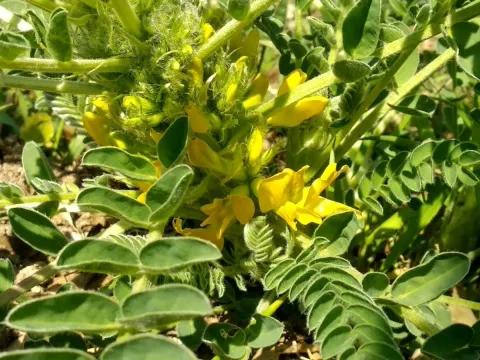
Large-fruited milkvetch
Astragalus macrocarpus
Large-fruited milkvetch (Astragalus macrocarpus) is a perennial herbaceous plant belonging to the Fabaceae family. It is known for its robust taproot system, which contributes to its resilience in challenging environmental conditions.
What the section contains
Large-fruited milkvetch
Sowing should ideally take place in early spring when soil moisture is sufficient to support germination. Late autumn sowing is also a viable option in regions with mild winters to allow for natural seed stratification.
Due to the hard seed coat, scarification is a highly recommended practice to improve germination rates and uniformity in the field. Seeds should be planted at a depth of approximately 1–2 centimeters.
During the first year of establishment, growth is notably slow, making weed control a priority for the grower. Once the plant has developed a strong root system, it competes effectively with surrounding vegetation.
This crop is often utilized for its ability to stabilize soil and its value as a hardy forage resource. It fits well into cropping systems in semi-arid environments where other legumes might fail.
The plant thrives in well-drained soils and is particularly well-adapted to loamy and calcareous substrates. Poor drainage is the most significant limiting factor, as it leads to root rot and reduced vitality.
Astragalus macrocarpus is exceptionally drought-tolerant, making it suitable for cultivation in regions with limited rainfall. It withstands extreme temperature ranges, both in summer heat and winter frosts.
Full sun exposure is required for optimal photosynthesis and development. Excessive shading will lead to stunted growth and reduced seed production, compromising the agricultural value of the stand.
While the plant can fix nitrogen through symbiotic bacteria, early-stage cultivation benefits from minimal mechanical inter-row cultivation to ensure soil aeration and reduce competition.
The soil pH should ideally remain between neutral and slightly alkaline levels. This adaptability makes it an excellent candidate for reclaiming degraded lands in arid territories.
Root rot is the primary disease concern, typically triggered by improper water management or waterlogged soil conditions. Maintaining proper drainage is the most effective preventative measure.
Insects such as weevils represent the most frequent pests, particularly affecting the plant during its active growth phases. Farmers should monitor fields regularly to prevent significant leaf area loss.
Aphids can infest young shoots during prolonged dry spells. If levels exceed economic thresholds, biological control agents are preferred to protect the natural balance of the field.
Powdery mildew may develop in dense plantings with poor airflow. Maintaining optimal spacing between rows helps to reduce humidity and prevents the spread of fungal pathogens.
Seed-feeding insects can cause substantial losses during the reproductive phase. Strategic timing of field monitoring and selective interventions are necessary to ensure a high-quality seed harvest.