
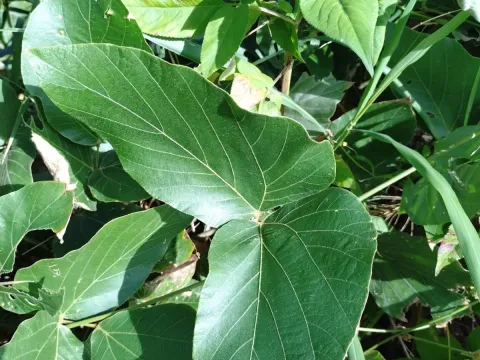
Kudzu
Pueraria
Kudzu is typically propagated via seeds, which possess a hard, durable coat that requires scarification to ensure uniform germination. Planting should be timed for the spring, once soil temperatures remain consistently above 15 degrees Celsius to support vigorous establishment.
What the section contains


Kudzu
In temperate climates, establishing the crop through seedlings is common practice to ensure young plants survive the initial growth stages before being transplanted into the open field. Proper row spacing is critical, as the vines have an aggressive growth habit and require ample room for development.
Choosing an isolated planting site is essential because Kudzu is a highly invasive perennial that can easily spread to surrounding agricultural lands if not managed properly. Seeds are generally sown at a depth of 2 to 4 centimeters, depending on soil moisture levels and texture.
During the first year, growth is concentrated on root development, so maintaining weed-free conditions is vital to allow the young plants to compete successfully. Consistent irrigation until the root system is established will significantly enhance the survival rates of the initial crop.
Inoculation of seeds with specific nitrogen-fixing bacteria is strongly recommended to optimize the crop's ability to fix atmospheric nitrogen. This practice reduces the need for supplemental fertilizers and promotes faster biomass accumulation in subsequent seasons.
As a member of the Fabaceae family, Kudzu is a fast-growing perennial legume vine known for its incredible biomass production. It is highly photophilous and thermophilic, thriving best in climates with long growing seasons and high solar radiation.
The crop prefers deep, well-drained loamy or sandy soils with a neutral to slightly acidic pH. Avoiding waterlogged areas is essential, as poor soil drainage can lead to root rot and severely diminish the overall vigor and yield of the plant population.
Kudzu is widely recognized for its drought tolerance, primarily due to its massive, deep-reaching root system capable of accessing subsurface water. Nevertheless, supplemental irrigation during peak summer growth stages can lead to significantly higher biomass yields.
While the top growth is killed back by frost, the large, starchy root crowns are resilient and can survive cold periods, enabling rapid regrowth in the spring. In regions with harsh winters, growers must account for the dormant period when planning the annual management cycle.
Adequate wind protection and a balanced fertility program focusing on phosphorus and potassium levels are necessary to maximize root health. These inputs are vital for helping the plant withstand seasonal stressors and ensuring consistent year-over-year production.
Kudzu is capable of producing some of the highest green biomass yields among leguminous forage crops. Through multiple harvests per season, it provides a consistent supply of high-protein forage that is highly beneficial for livestock nutrition.
Beyond forage, the massive starchy roots are an economically significant component of the crop, with individual specimens accumulating large amounts of biomass over several years. Harvesting these roots typically occurs after 3 to 5 years, when starch content peaks.
The vines are rich in fiber, making them suitable not only for silage but also for potential use as a raw material in the textile industry. Furthermore, planting Kudzu on slopes is a proven method for soil conservation, as the extensive root network stabilizes the ground and prevents erosion.
Young leaves and shoots are highly palatable to cattle, goats, and rabbits, offering a nutritious feed option that improves overall animal performance. Its balanced biochemical composition makes it an excellent ingredient for high-quality livestock feed formulations.
Emerging research indicates that Kudzu has significant potential as a sustainable source for biofuels and biodegradable plastics. This versatility continues to attract interest, positioning the crop as a valuable resource for future industrial applications.
Despite its robustness, Kudzu is susceptible to various fungal diseases, particularly when grown under high humidity or in overcrowded conditions. Powdery mildew is among the most common pathogens, which can affect the photosynthetic efficiency of the leaves.
Root rot often occurs in poorly drained soils where the lack of aeration facilitates the growth of soil-borne pathogens. Adopting proper field rotation and ensuring excellent soil drainage are the most effective preventative measures against these diseases.
Pests, including certain types of weevils and leaf-feeding insects, can cause significant damage to the foliage during the peak growing season. Regular field monitoring is essential to prevent these outbreaks from significantly impacting overall biomass production.
Due to its invasive nature, Kudzu can become a nuisance, overwhelming other crops and surrounding infrastructure. Effective management often requires strictly limiting the perimeter of the planting area to prevent uncontrolled spread beyond designated agricultural zones.
Integrated pest management strategies should be used to minimize the reliance on chemical pesticides, ensuring the final forage remains safe for animal consumption. Frequent mowing often serves as a natural deterrent to both weed proliferation and pest pressure.
The harvest of green biomass is typically performed through multiple mowings throughout the growing season, ideally before the onset of flowering. This strategy maximizes the protein-to-fiber ratio, ensuring that the harvested material maintains high nutritional value.
For hay production, the tough vines must be thoroughly shredded to facilitate uniform drying, which is crucial for preventing spoilage. Specialized forage harvesters can efficiently process the dense vegetation to produce high-quality bales.
Root harvesting is conducted in the autumn when starch reserves are at their highest in the underground storage organs. Using heavy equipment is necessary to extract the deep, complex roots without causing excessive damage to the harvestable biomass.
Once collected, the roots are thoroughly cleaned and processed, often through washing and grinding, to extract commercial-grade starch. In smaller operations, manual harvesting is sometimes preferred to maintain the integrity of the root material for medicinal or culinary uses.
Storage of the root product requires a cool, dry environment to mitigate the risk of mold growth. Because of its stable nature after proper processing, the harvest can be stored for extended periods, allowing for flexible supply chain management.