
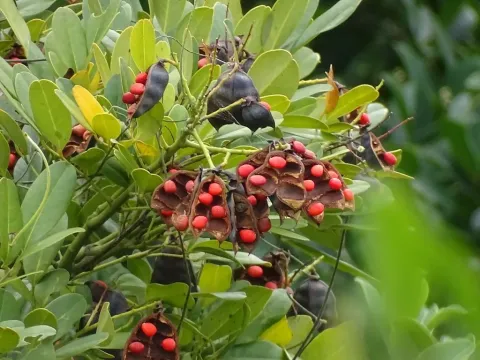
Ormosia
Ormosia Jacks.
Ormosia is a genus of flowering plants in the pea family, Fabaceae. It comprises various species of trees and shrubs that are primarily distributed across tropical and subtropical regions of the Americas and Asia.
What the section contains
Ormosia
The plant thrives in regions with consistent warmth and humidity, mirroring its native forest habitat. It requires well-drained, nutrient-rich soils to support its rapid vegetative development and long-term vitality.
Climatic conditions for successful cultivation involve high annual rainfall and a lack of frost, as the species is highly sensitive to cold stress and extreme temperature drops.
Botanically, Ormosia is known for its compound leaves and characteristic woody pods containing hard, often brightly colored seeds. These seeds are a distinct biological feature often used in local handicrafts.
The economic importance of Ormosia is primarily tied to its high-quality wood. The timber is prized for its durability, hardness, and attractive grain, making it suitable for furniture making and interior design.
Root rot pathogens represent a significant threat to Ormosia plantations, especially in areas where soil drainage is inadequate and water tends to stagnate around the root system.
Various borers and wood-feeding insects can cause extensive damage to the trunk and branches, impacting both the structural integrity of the tree and the market value of the harvested timber.
Fungal leaf spots are common in environments with poor air circulation, which can weaken the trees if not managed through proper spacing and pruning techniques.
Integrated pest management strategies involve regular field scouting and the use of preventative cultural practices to maintain a healthy forest ecosystem.
Sanitation measures, such as the removal of infected plant debris, remain the most effective approach to limiting the spread of pathogens within high-density planting sites.