
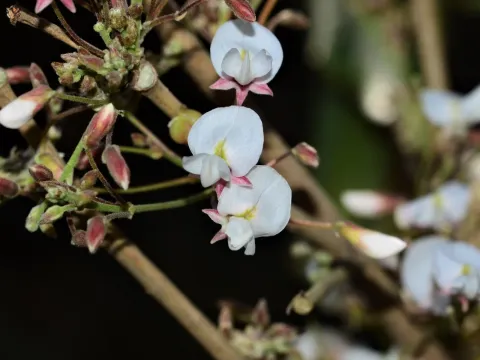
Ougeinia
Ougeinia
Ougeinia (Ougeinia oojeinensis) is a deciduous leguminous tree species native to the tropical forests of the Indian subcontinent. It is highly valued for its ability to thrive in challenging environments where other species fail.
What the section contains

Ougeinia
The tree demonstrates exceptional adaptability to various soil types, particularly gravelly and nutrient-poor rocky soils. Its root system is effective at stabilizing slopes, making it a key species for land restoration and soil erosion control.
Climatically, Ougeinia prefers regions with distinct wet and dry seasons. It is remarkably drought-tolerant, which allows it to survive in arid regions provided it receives sufficient sun during its growth phase.
As a light-demanding species, Ougeinia requires full sun exposure to reach its maximum height and diameter. In nursery conditions, providing adequate space between seedlings is essential for healthy development.
Economically, Ougeinia is highly versatile. It provides a durable, high-quality timber used for agricultural tools, carriage building, and furniture. Furthermore, its leaves are rich in nutrients and are widely utilized as fodder for livestock.
Leaf-eating insects are among the primary threats to Ougeinia. Larvae infestation can cause significant defoliation, which stunts the growth of young trees if left unmanaged during the peak season.
Fungal pathogens often impact Ougeinia in environments with poor air circulation or excessive soil moisture. These infections can manifest as leaf spots or stem lesions, negatively affecting the overall vigor of the trees.
Wood-boring beetles present a major challenge for timber production. These insects penetrate the trunk, which not only lowers the aesthetic value of the wood but also compromises the structural integrity of the tree.
Root rot is a common issue when Ougeinia is planted in waterlogged soil. Ensuring that the planting site has efficient drainage is the most effective preventative measure against such diseases.
Herbivory is a significant threat during the establishment phase. Young saplings are highly attractive to both wild herbivores and domestic livestock, necessitating physical protection methods until the plants are established.