
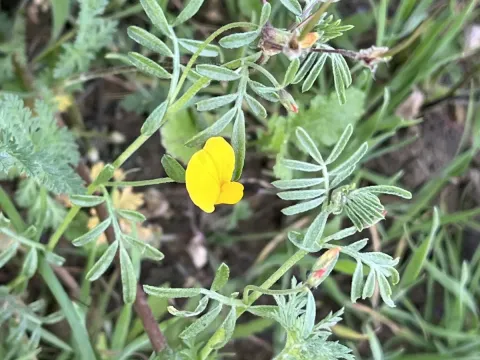
Ottleya
Ottleya
Ottleya is a genus of plants belonging to the Fabaceae family, which comprises several species formerly categorized within the Lotus genus. These legumes are well-regarded in botanical studies for their resilience in harsh environmental conditions, primarily native to North America.
What the section contains

Ottleya
The morphology of Ottleya involves herbaceous or semi-shrubby habits with pinnate leaves. Their ability to thrive in arid and semi-arid regions makes them a subject of interest for sustainable agriculture and land restoration projects.
Regarding soil requirements, these plants prefer well-drained, porous soils. They are known for their tolerance to low-nutrient substrates, which allows them to grow in areas where other agricultural crops might fail due to lack of fertilization.
Climate adaptation is a hallmark of the genus. Species within this group show high resistance to drought, making them suitable for cultivation in regions with irregular rainfall patterns where water-efficient farming is prioritized.
As nitrogen-fixing plants, they significantly improve soil health. This natural process of atmospheric nitrogen assimilation reduces the need for synthetic nitrogen fertilizers, supporting the goals of organic farming and sustainable rotation systems.
Ottleya is susceptible to several common legume diseases, primarily fungal root rots and foliar diseases such as rusts that emerge under high-humidity conditions.
Pest pressures often include beetle larvae and aphids, which can damage tender leaves and stems, potentially reducing the overall biomass production of the stands.
Managing these threats requires proper site selection, specifically focusing on drainage to prevent root saturation and maintaining adequate plant spacing to allow for airflow.
Integrated pest management (IPM) strategies are highly recommended to control populations of insects without disrupting the natural soil microbiome.
- Drainage maintenance
- Crop rotation planning
- Use of resistant varieties