
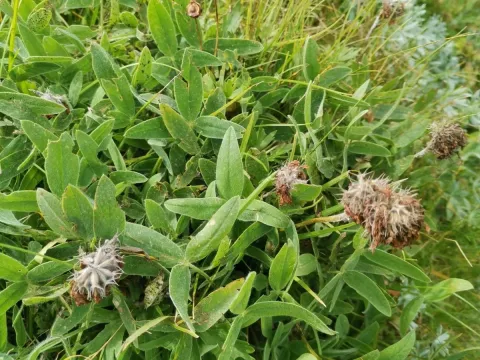
Noric clover
Trifolium noricum
Noric clover is a perennial legume recognized for its robust growth habit and adaptability to various environmental conditions, originating from mountainous regions.
What the section contains
Noric clover
Sowing should ideally occur in the early spring, ensuring the soil has sufficiently warmed up to support the germination process of these small-sized seeds.
The planting depth must be kept shallow, generally between 1 and 2 centimeters, as the seeds have limited energy reserves to emerge from deeper soil layers.
Creating a firm and smooth seedbed is essential to ensure consistent seed-to-soil contact, which significantly improves the rate and uniformity of germination.
In regions with milder winter climates, dormant or late-autumn seeding is possible, allowing the plants to utilize spring soil moisture for early development.
This species thrives in well-drained, lime-rich soils and prefers a neutral or slightly alkaline pH environment to maximize root nodule nitrogen fixation.
Noric clover demonstrates excellent winter hardiness, allowing it to withstand frost and survive in regions with demanding climatic conditions and cold temperatures.
As a light-demanding crop, it performs best in open areas where it is not overshadowed by taller grasses, ensuring adequate photosynthesis for its development.
While moderately drought-tolerant due to a deep root system, it maintains optimal growth in conditions of steady, moderate rainfall throughout the growing season.
Adequate availability of phosphorus and potassium is critical for plant health, providing the strength required for stem stability and winter survival preparation.
The biomass yield of Noric clover is reliable and highly dependent on managing soil fertility and the frequency of mowing or grazing throughout the season.
Under favorable management, the crop can provide multiple cuts, offering a continuous supply of high-protein feed for livestock during the growing year.
Maximizing yield quality requires harvesting at the early blooming stage, which optimizes the balance between total biomass production and nutrient content.
Proper pasture management ensures that the plant has sufficient recovery time between cuts, preventing the depletion of stored nutrients within the root system.
Seed production is contingent upon favorable weather conditions during the flowering phase, as successful pollination by insects is vital for a high-quality yield.
Fungal diseases, such as leaf spot and anthracnose, represent the primary biological threats, often exacerbated by high humidity and poor air circulation within the stand.
Root rot, often caused by soil compaction or poor drainage, can significantly weaken the stand, leading to reduced vigor and increased susceptibility to other pathogens.
Common insect pests include clover weevils and aphids, which can damage leaves and reproductive structures, thereby impacting both forage and seed yields.
Effective management includes integrated pest control strategies, such as crop rotation, maintaining proper plant spacing, and the use of resistant varieties where available.
Regular field scouting allows for the early detection of disease or pest infestations, facilitating targeted treatments that protect the long-term health of the crop.
Harvesting for hay should be timed carefully during the late budding to early flowering stages to ensure the highest protein density and digestibility for animal feed.
Careful raking and drying techniques are necessary to prevent the shattering of leaves, which are the most nutrient-dense part of the forage plant.
Utilizing modern machinery for timely cutting and turning helps preserve the nutritional value by reducing exposure to adverse weather conditions during the drying process.
For seed harvesting, the crop should be gathered when the majority of seed heads have turned brown, indicating they have reached full physiological maturity.
Post-harvest handling requires immediate cleaning and drying to reach optimal moisture levels, ensuring the long-term viability and storage stability of the seeds.