
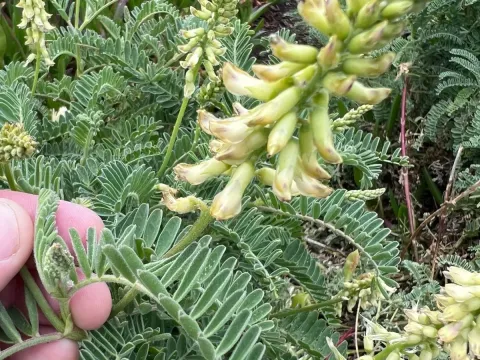
Nuttall's milkvetch
Astragalus nuttallii
Nuttall's milkvetch (Astragalus nuttallii) is a perennial herbaceous plant belonging to the Fabaceae family. Native to the coastal regions of western North America, it is particularly well-adapted to maritime environments characterized by sandy soils and saline exposure.
What the section contains
Nuttall's milkvetch
This species is highly valued for its ability to thrive in nutrient-poor substrates. Its root system is deep and expansive, which not only allows it to access water reserves in dry soils but also serves an essential function in soil erosion control and stabilization.
Regarding climatic requirements, the plant prefers open, sunny locations. It exhibits significant drought tolerance, making it a potential candidate for revegetation projects in arid zones where standard agricultural crops might struggle due to limited moisture availability.
The plant exhibits typical characteristics of leguminous species, including the ability to fix atmospheric nitrogen through symbiotic relationships with soil bacteria. This makes Nuttall's milkvetch a useful component in ecological restoration and sustainable land management strategies.
When considering cultivation, soil texture is the most critical factor. The plant requires excellent drainage to prevent root rot. It is not suitable for heavy clay soils or areas with standing water, as these conditions rapidly promote the decline of its health.
Fungal pathogens are among the primary threats to Nuttall's milkvetch, especially in coastal areas with high humidity. Leaf spot diseases and root rots are common, usually triggered by poor air circulation or over-saturation of the soil during the dormant season.
Insects, particularly weevils of the genus Apion, represent a significant threat to seed production. These pests bore into the seed pods, destroying the embryos and potentially reducing the viability of the entire crop for future propagation.
Aphid infestations can cause substantial damage to young, tender stems during the growing season. By draining the plant's resources, these insects limit the plant's ability to develop a robust structure, making it more vulnerable to secondary bacterial infections.
Weed competition poses a major challenge during the establishment phase. Invasive species that grow faster can outcompete the milkvetch for light, space, and soil nutrients, necessitating careful site preparation and weed management strategies before sowing.
Preventative management involves monitoring for early signs of distress. Cultural practices such as maintaining proper plant spacing and ensuring that the soil remains well-drained are the most effective ways to mitigate the risk of disease and pest outbreaks.