
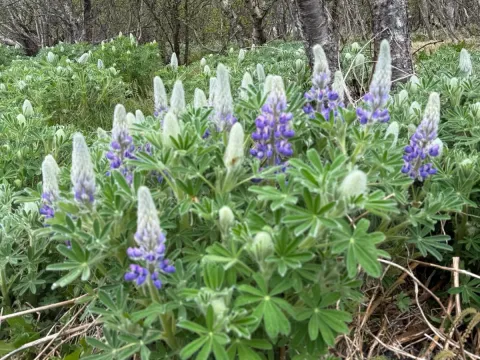
Nootka lupine
Lupinus nootkatensis
Nootka lupine is a robust perennial herb belonging to the Fabaceae family, native to the cold, coastal regions of North America. It is recognized for its ability to thrive in challenging environments where other legumes might struggle to establish.
What the section contains
Nootka lupine
Sowing typically takes place in early spring as soon as the soil is workable. Cold-hardy seeds can withstand low temperatures, and proper timing ensures that the root system develops well before the onset of summer heat.
The recommended planting depth is 2 to 4 centimeters. For optimal results, seeds should be sown in prepared soil with good drainage to prevent waterlogging during the germination phase.
Seeding rates are adjusted based on the intended use, whether it is for soil improvement, fodder production, or landscaping. High-density sowing is preferred for nitrogen-fixing cover crops.
Given the plant's biological characteristics, it establishes a deep taproot that allows it to access deeper nutrients and moisture, contributing to its high survival rate in diverse soil conditions.
The plant prefers well-drained, sandy or loamy soils. It has a notable tolerance for acidic soil conditions, which makes it an excellent candidate for reclaiming degraded lands and improving soil structure.
Nootka lupine thrives in cool, temperate climates. Its high tolerance to frost and extreme weather fluctuations allows it to grow successfully in northern latitudes where other cultivars may fail.
Adequate sunlight is necessary for robust growth and flower production. While it is adaptable, partial shade can lead to leggy growth and lower seed yields in intensive agricultural settings.
Nitrogen fixation is facilitated by a symbiotic relationship with specific rhizobia bacteria. Ensuring the presence of these bacteria in the soil is crucial for the plant to reach its full development potential.
The crop requires moderate moisture during the seedling phase, but once mature, it demonstrates significant drought tolerance due to its extensive and deep-reaching root system.
Common issues include fungal diseases such as anthracnose and root rot, which are often exacerbated by poor drainage and excessive air humidity during the vegetative growth phase.
Pests like aphids and various species of weevils can cause significant damage to young foliage and developing seed pods, necessitating careful monitoring throughout the growing season.
Integrated pest management strategies are recommended to mitigate these risks. This includes crop rotation and the selection of disease-resistant varieties if available in the local seed market.
Field sanitation is essential; removing debris from previous seasons helps reduce the overwintering of pathogens that could compromise the health of new plantings.
Chemical control should be used judiciously, prioritizing products that are environmentally safe and effective against specific target pests to maintain the balance of beneficial insects.
Harvesting for green manure is most effective at the peak of the flowering stage, as this is when the biomass contains the highest concentration of nitrogen and organic matter.
Seed harvesting should be timed precisely when the pods turn color and become brittle. Delayed harvesting leads to natural dehiscence and significant loss of yield in the field.
Modern harvesting equipment, such as combines with adjusted settings, is used to ensure clean collection of seeds while minimizing breakage and waste during the threshing process.
Post-harvest processing involves cleaning and drying the seeds to a safe moisture level. This stability is critical for preventing fungal growth and maintaining viability for future seasons.
The integration of plant residues back into the soil serves as a sustainable practice, providing valuable nutrients that naturally enrich the field for subsequent agricultural cycles.