
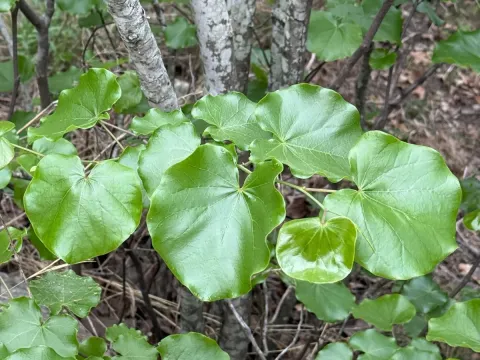
Oklahoma redbud
Cercis reniformis
Seeds of Cercis reniformis require specific preparation techniques due to their hard seed coat, which naturally inhibits germination under standard conditions.
What the section contains
Oklahoma redbud
Scarification using mechanical abrasion or brief acid treatment is highly recommended to break dormancy and ensure uniform seedling emergence.
Following scarification, cold stratification at temperatures ranging from 1 to 5 degrees Celsius for several weeks significantly improves success rates.
Seedlings should be grown in well-draining potting media and protected from harsh climate fluctuations during their first active growth season.
Spacing between nursery containers should allow for adequate air circulation to prevent the development of damping-off and other fungal pathogens.
Cercis reniformis, a member of the Fabaceae family, thrives in full sun exposure, which is essential for maximizing its characteristic floral display.
The tree adapts to a variety of soil textures but strictly requires excellent drainage, as saturated root zones quickly lead to physiological decline.
Soil pH should ideally be in the neutral to slightly alkaline range; incorporating organic matter can improve nutrient availability and soil structure.
Once established, the tree exhibits remarkable drought tolerance, making it a sustainable choice for landscapes in arid or semi-arid environments.
Minimal pruning is needed; however, removing crossing or dead branches during the dormant season maintains the health and structural integrity of the tree.
Verticillium wilt is the primary biological threat to Cercis species, often causing irreversible branch dieback and requiring careful management.
Foliar diseases, including leaf spot and various mildews, may manifest during prolonged periods of high humidity and limited wind movement within the canopy.
Insect pests such as leafhoppers and scale insects can impact tree vitality by feeding on sap and excreting honeydew, which promotes sooty mold growth.
Borers can cause significant structural damage by tunneling into the bark and cambium, eventually weakening the tree against secondary infections.
Integrated pest management, involving proper sanitation and the use of targeted biological controls, remains the most effective strategy for plant health.