
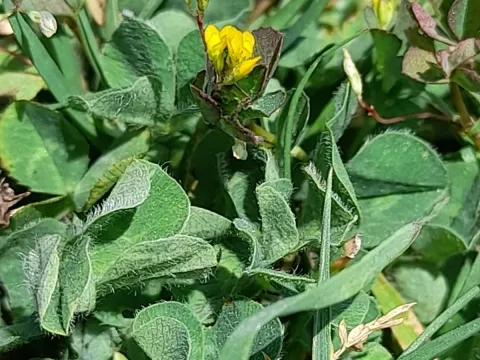
Suckling clover
Trifolium micranthum
Suckling clover is primarily managed as an annual crop, with sowing typically scheduled for early spring. It is vital to wait until soil temperatures consistently reach 8–10 degrees Celsius to promote rapid and uniform germination across the field.
What the section contains
Suckling clover
Given the extremely small size of the seeds, a shallow sowing depth of 1–2 centimeters is critical. Sowing too deep will prevent the seedlings from reaching the surface, leading to significant yield losses before the crop even establishes.
The standard seeding rate is generally between 8 and 12 kilograms per hectare, depending on soil preparation and expected stand density. Utilizing high-quality, certified seeds is recommended to ensure strong initial growth.
Many agronomists suggest sowing this clover under a cover crop, such as a light cereal. This method provides the seedlings with shade and protection from dry winds during the sensitive early stages of their development.
Post-sowing soil compaction is an essential step to ensure optimal seed-to-soil contact. This practice facilitates capillary water movement, which is essential for the tiny seeds to draw enough moisture from the surrounding environment.
As a member of the Fabaceae family, this species thrives in open, sunny environments. It struggles to compete in heavily shaded areas, making it better suited for open pastures and clear meadows.
The crop prefers well-drained loamy or sandy soils with a neutral pH level. While it shows some adaptability, extreme soil acidity or poor drainage significantly hinders its symbiotic relationship with nitrogen-fixing bacteria.
Regarding climatic needs, suckling clover requires moderate rainfall throughout the growing season. It is not considered highly drought-tolerant, so areas with reliable moisture levels during spring and early summer produce the best results.
Soil fertility management is crucial, particularly the availability of phosphorus and potassium. These nutrients play a significant role in root development and overall plant vitality, helping the clover fix nitrogen more efficiently.
In terms of regional distribution, this plant is native to Europe and thrives in temperate climates. Its ability to colonize disturbed soil makes it an effective species for meadow restoration and pasture improvement programs.
The primary agricultural use for this plant is its incorporation into permanent pasture mixes. It is highly valued for its ability to improve the nutritional quality of forage, providing livestock with essential protein.
While it may not produce the massive dry matter yields of larger clover varieties, its high palatability and nutritional density compensate for the lower biomass. It is an excellent choice for balancing grazing rotations.
This species is known for its impressive ability to recover after grazing or cutting. Under proper management and adequate moisture, it can provide multiple harvests throughout the season, maintaining quality forage for cattle and sheep.
Besides its feeding value, it serves as a natural nitrogen source. By enriching the soil, it benefits subsequent crops in the rotation, making it a sustainable tool for farmers looking to reduce synthetic fertilizer dependency.
Its structural impact on the soil is also noteworthy. The root system contributes to soil aeration and the breakdown of organic matter, which increases long-term soil health and water-holding capacity.
Fungal diseases like powdery mildew and leaf spot are the most common issues, especially during damp or humid seasons. Good field ventilation and avoiding excessive moisture retention help keep these issues in check.
Pests, particularly weevils, can target both the vegetative foliage and the developing seed heads. Regular monitoring during the flowering stage is essential to determine if intervention is needed to protect the harvest.
Aphid infestations may occur in dense stands, potentially stunting growth. Biological controls, such as encouraging natural predators, are generally preferred over intensive chemical treatments to maintain a healthy ecosystem.
Poor grazing management, such as overstocking, can cause the clover to decline and weeds to proliferate. Rotating grazing animals correctly ensures the stand remains vigorous and competitive against invasive plants.
A rigorous crop rotation strategy is the best defense against soil-borne pathogens. Avoiding legume-on-legume planting for at least 3–4 years helps break disease cycles and maintains high productivity levels.
Harvesting for hay should occur when the clover is in full bloom. This stage marks the peak of the plant’s nutrient concentration, ensuring the highest possible quality for animal feed.
Drying the cut forage requires careful handling to preserve the leaf-to-stem ratio. Since the leaves are the most nutrient-dense part, minimizing mechanical damage during the raking and baling process is key to quality preservation.
For seed production, harvesting is timed when the majority of seed pods turn brown. Because the seeds are tiny and prone to shattering, prompt harvesting is necessary to prevent significant field losses.
Once harvested, seed must be cleaned and stored at appropriate moisture levels. This prevents heating and mold growth, which are the main risks for small-seeded legumes during the post-harvest storage period.
The remaining biomass after seed harvest can be incorporated back into the soil. This practice acts as a green manure, effectively returning carbon and residual nitrogen to the soil profile for future planting cycles.