
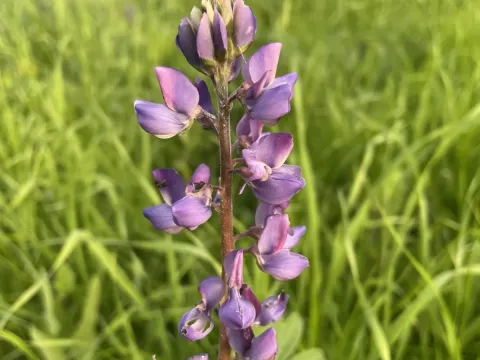
Succulent lupine
Lupinus succulentus
Succulent lupine, scientifically known as Lupinus succulentus, is an annual leguminous plant native to the western regions of North America. It is recognized for its thick, fleshy stems and its capacity to thrive in diverse sandy or well-drained soil environments.
What the section contains
Succulent lupine
Sowing should take place in early spring, once the soil temperature is adequate for germination. Early planting is essential to allow the plant to establish a deep taproot system before the onset of the drier summer months.
The recommended seeding depth is approximately 3 to 5 centimeters. Proper seedbed preparation is crucial to ensure optimal seed-to-soil contact, which significantly improves the germination rate and uniformity of the crop.
Row spacing is typically adjusted based on the specific end-use; closer spacing is preferred for green manure applications to create a dense canopy, while wider spacing is more suitable for seed production or decorative landscaping.
Given its symbiotic relationship with nitrogen-fixing bacteria, inoculation with specific Rhizobium strains can be beneficial if the soil lacks the necessary indigenous bacteria to ensure maximum nitrogen accumulation.
This species requires full sun exposure and well-drained soil to reach its peak growth potential. While it exhibits decent drought tolerance, moisture availability during the flowering phase is critical to maintaining vegetative vigor.
Soil pH should ideally be neutral or slightly acidic. The plant is sensitive to waterlogged conditions, as its roots are susceptible to rot in oxygen-deprived environments, making proper soil drainage a priority for growers.
Minimal fertilization is generally required for succulent lupine due to its ability to fix atmospheric nitrogen. However, supplemental phosphorus and potassium can enhance root development and overall plant resistance to environmental stress.
Maintenance involves routine weeding in the early stages to prevent competition for light and water. Once the crop reaches a height of 15–20 centimeters, it is usually strong enough to shade out most competing weeds independently.
The climate requirement is characteristic of temperate zones with mild winters, as the plant is not frost-hardy and will perish in extreme freezing conditions, which is why it is managed as an annual crop in agricultural systems.
Succulent lupine is primarily utilized in agriculture as a high-value green manure or cover crop. By incorporating the biomass into the soil, farmers can significantly improve soil organic matter and nitrogen content.
The plant serves as a valuable forage source in some regions, offering a high-protein diet for livestock. However, users must be aware of potential alkaloid content in certain varieties and ensure they are suitable for animal consumption.
The crop acts as a natural soil conditioner, helping to break up compacted soil layers with its deep, persistent taproot, which improves the porosity and aeration of the soil profile for future planting cycles.
When used as a green manure, the yield of biomass can be quite substantial, often reaching several tons per hectare under ideal growing conditions, providing a major boost to soil fertility for subsequent nitrogen-demanding crops.
The integration of succulent lupine into crop rotations reduces the dependency on chemical nitrogen fertilizers, contributing to more sustainable farming practices and better long-term soil health management.
Common fungal diseases that may impact succulent lupine include fusarium wilt and anthracnose, which typically occur under conditions of excessive humidity, poor air circulation, or contaminated soil sources.
Pests such as aphids and lupine weevils can cause significant damage to young shoots, flowers, and developing seed pods. Integrated pest management (IPM) strategies, including biological controls, are recommended to minimize damage.
Prevention is the best defense; using high-quality, disease-free seed and maintaining a consistent crop rotation cycle helps mitigate the risk of pathogen buildup in the soil over time.
Farmers should monitor the crop regularly for early signs of infection, such as leaf yellowing or stunted growth. Immediate action, such as thinning or targeted intervention, can prevent the spread of diseases throughout the field.
Maintaining strong, vigorous plants through proper nutrition and water management is the most effective way to improve the crop's natural tolerance to pests and minor disease outbreaks.
Harvesting for green manure or biomass should ideally occur at the onset of the full-flowering stage, when nutrient accumulation in the stems and leaves is highest and the plant is tender enough for quick decomposition.
Seed harvesting requires careful timing; the pods should be allowed to turn brown but must be harvested before they spontaneously shatter to release their seeds, which would result in substantial yield loss.
For seed production, a two-stage harvest approach—cutting the crop and letting it dry in swaths before threshing—is often employed to reduce the moisture content and prevent damage to the seeds during the mechanical process.
Post-harvest, any residual straw should be incorporated back into the field or collected for composting. This returns essential nutrients to the soil, supporting the nutrient cycle within the agricultural ecosystem.
Stored seeds must be kept in a cool, dry environment with low humidity levels. Proper aeration in storage is vital to prevent fungal growth and ensure the longevity of the seeds for the following planting season.