
Suffocated clover
Trifolium suffocatum
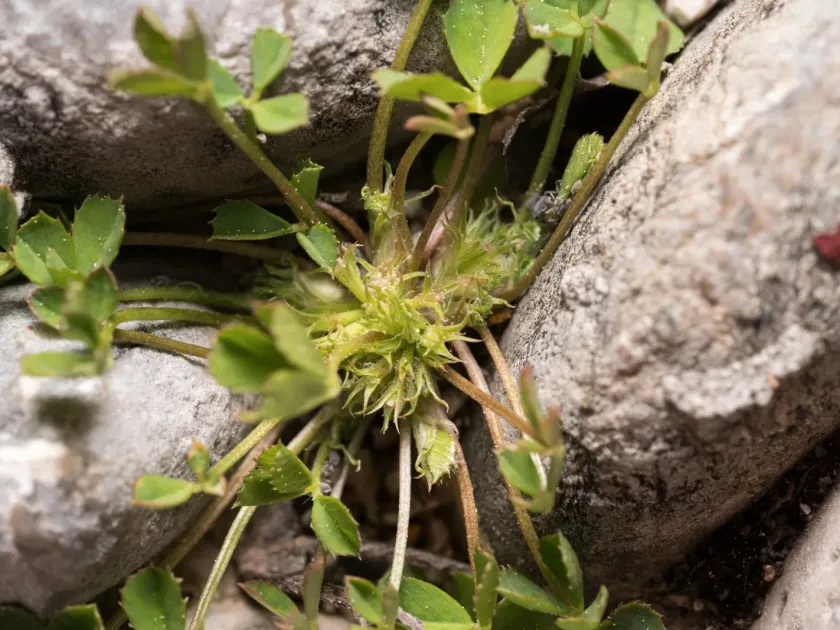
Description
Growing requirements
Suffocated clover Trifolium suffocatum is an annual herbaceous plant belonging to the Fabaceae family. It is typically found in coastal regions, sandy soils, and arid environments where it can thrive with minimal competition.
The species is native to the Mediterranean region and Western Europe. It is well-adapted to Mediterranean-type climates, characterized by warm, dry summers and mild, wet winters, allowing it to complete its life cycle before extreme heat sets in.
Botanically, it is a prostrate plant with small, dense flower heads that often appear semi-submerged in the soil or leaf litter. This unique morphology helps the plant conserve moisture and ensures reproductive success in harsh, windy, or sandy conditions.
The plant requires well-drained, sandy or gravelly soils to thrive. It is highly intolerant of waterlogged conditions and prefers full sun, which is necessary for maintaining its low-growing, compact habit.
In agricultural contexts, this clover is not typically used for high-yield fodder, but it holds value in ecological restoration, such as stabilizing loose soils and promoting nitrogen fixation in nutrient-poor environments.
Main diseases and pests
The plant is susceptible to common legume pathogens, including powdery mildew and various leaf rusts, which become problematic when humidity levels remain high for extended periods within the vegetation cover.
Insects such as clover root weevils and aphids are significant threats, particularly during the seedling phase and early vegetative growth, where they can severely stunt plant development.
Root rot, often caused by fungal pathogens in poorly drained soils, remains the most lethal threat to Trifolium suffocatum populations, frequently causing localized stand failure in suboptimal sites.
Nematode infestations can also inhibit the plant's ability to form symbiotic root nodules, which effectively halts the nitrogen-fixing process and weakens the overall vigor of the clover stand.
Effective management focuses on site selection and ensuring proper soil drainage, as most chemical fungicides are rarely economical for this specific type of clover cultivation.