
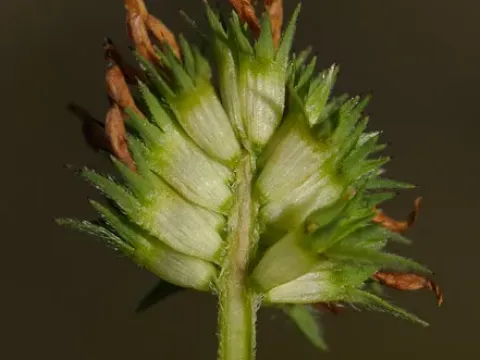
Constantinople clover
Trifolium constantinopolitanum
Constantinople clover is an annual legume that is best sown in early spring when soil temperatures reach 8–10 degrees Celsius. Planting early helps ensure the seeds have sufficient moisture to germinate before the onset of the typical summer drought.
What the section contains
Constantinople clover
The seeding rate depends on the intended use, whether it is for hay or green fodder. Seeds should be sown at a shallow depth of 1–2 centimeters, which encourages uniform emergence and reduces the energy required for seedlings to push through the soil.
Preparing a fine, firm seedbed through cultivation and rolling is essential for these small-seeded legumes. Good soil-to-seed contact ensures that the young plants can access the moisture needed for initial establishment.
While spring sowing is the standard practice, in regions with milder winters, fall sowing may be possible. The primary goal is to ensure the plant completes most of its vegetative cycle before the heat of summer restricts growth.
When grown in mixtures with grasses, sowing times must be synchronized to ensure both components reach their optimal harvest stage simultaneously. This synergy results in higher-quality, more balanced forage for livestock.
Belonging to the Fabaceae family, this species is well-adapted to the Mediterranean climate. It thrives in well-drained loamy or sandy-loam soils and performs best in neutral to slightly alkaline conditions.
Constantinople clover shows a remarkable tolerance to moderate drought, making it a reliable choice for arid regions. However, for maximum biomass production, adequate moisture during the active growth phase is highly beneficial.
As a light-loving plant, it does not tolerate competition from weeds or shade from taller crops. Maintaining a weed-free environment during the early stages of development is crucial for establishing a dense and productive stand.
The plant relies on nitrogen-fixing bacteria in the root nodules. In fields where clover has not been grown recently, inoculating the seeds with specific rhizobia strains can significantly boost growth and nitrogen assimilation efficiency.
Soil fertility management, particularly the application of phosphorus and potassium, can greatly enhance root development and plant hardiness. Healthy soil structure prevents waterlogging, which is detrimental to the survival of this clover.
The yield of Constantinople clover is determined by the quality of the soil and the level of management. Under optimal conditions, the plant is capable of producing a significant quantity of highly nutritious fodder in a single cut.
The peak nutrient content occurs around the early bloom stage, which is the recommended time for harvesting. Timing is essential to balance total biomass production with the crude protein concentration and digestibility of the material.
Strategic use of fertilizers can lead to substantial increases in yields per hectare. Furthermore, when moisture is available, the plant demonstrates good regrowth capacity, potentially allowing for additional grazing or light cuts.
Due to its high leaf-to-stem ratio, the resulting forage is very palatable to livestock. Whether provided as fresh forage or conserved as hay, it serves as a valuable protein source in animal diets.
Seed production is an economically viable enterprise. Healthy stands can produce high yields of seeds that retain their viability for several years if stored under appropriate, cool, and dry conditions.
Constantinople clover can be susceptible to common legume diseases, such as powdery mildew, especially in humid conditions. Implementing a diverse crop rotation is a primary defense against the buildup of soil-borne pathogens.
Insect pests, including leaf weevils and seed-feeding beetles, pose a risk to both the vegetative foliage and the seed harvest. Regular scouting is necessary to detect infestations early and prevent significant damage to the stand.
Aphid outbreaks can occur during dry spells, stressing the plants and potentially spreading viral diseases. Integrated pest management, which includes encouraging natural predators, is the preferred approach to maintaining a healthy crop.
Root rot is often a consequence of poor drainage or waterlogging. Ensuring fields are leveled to prevent standing water is a critical preventative measure against root decay and overall plant decline.
Proactive field management, including the removal of nearby weeds that may harbor pests, is essential. Keeping the crop healthy through proper nutrition and water management makes the plants more resilient to environmental stressors and attacks.
The optimal harvest window for forage is the early flowering stage. Cutting at this time ensures the best balance between dry matter yield and nutritional quality, providing a high-protein feed for livestock.
When making hay, the crop should be turned carefully to ensure uniform drying while minimizing the shattering of nutrient-rich leaves. Mechanical equipment that offers gentle handling is preferred to maintain the quality of the final product.
If used for green fodder, harvesting should occur before flowering to maximize tenderness and digestibility. This management strategy ensures the animals receive a soft, palatable product that supports high performance.
For seed collection, harvesting should be performed once the heads have darkened. A two-stage process, involving cutting into swaths and subsequent threshing, is effective in reducing seed shattering losses.
Post-harvest processing involves cleaning and drying the seeds to reach standard moisture content. Proper storage of these seeds is fundamental to preserving their germination energy for the following season.