
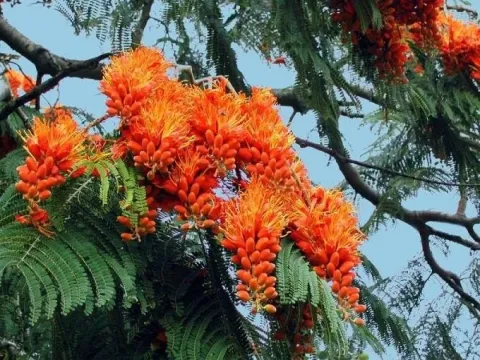
Colvillea
Colvillea
Colvillea (Colvillea racemosa) is a magnificent tree species belonging to the Fabaceae family. Native to Madagascar, this plant is renowned for its stunning, grape-like clusters of bright orange flowers that create a vibrant display during the blooming season.
What the section contains
Colvillea
The tree typically reaches heights of 10 to 15 meters and requires a spacious area to accommodate its broad, spreading canopy. Its pinnate leaves provide a fine texture that makes it an excellent ornamental choice for large landscape designs.
Ideal conditions for cultivation involve full sun exposure and well-draining soil. While the species is somewhat drought-tolerant once established, it thrives best in deep, fertile soils that are kept moist but never waterlogged.
Climate is the primary factor limiting the range of this species. It is strictly a tropical plant that cannot tolerate temperatures below freezing. It performs best in regions where high humidity and warm temperatures persist throughout the year.
In terms of agricultural and horticultural use, Colvillea is primarily cultivated for its aesthetic value in parks and gardens. It is highly sought after by collectors of exotic tropical flora due to its unique floral morphology and seasonal visual impact.
The primary pests affecting Colvillea include sap-sucking insects like mealybugs and scale insects. These pests cluster on tender stems and leaves, extracting nutrients and potentially leading to the development of sooty mold.
Fungal pathogens represent a significant threat, especially during prolonged rainy seasons. Leaf spot diseases are common, appearing as necrotic patches that can weaken the overall health of the tree if left untreated.
Root rot is perhaps the most dangerous condition for Colvillea, usually caused by poor drainage or excessive irrigation. Once the root system is compromised, the tree may show signs of yellowing leaves and sudden branch dieback.
Nutritional deficiencies can occur if the soil pH becomes too alkaline, preventing the uptake of iron and manganese. Regular monitoring of foliage color is necessary to identify early signs of nutrient imbalances and apply soil amendments.
Effective management includes maintaining proper tree spacing to promote airflow, which reduces the likelihood of fungal infections. Regular pruning of dead or diseased branches helps in maintaining tree vigor and structural integrity.