
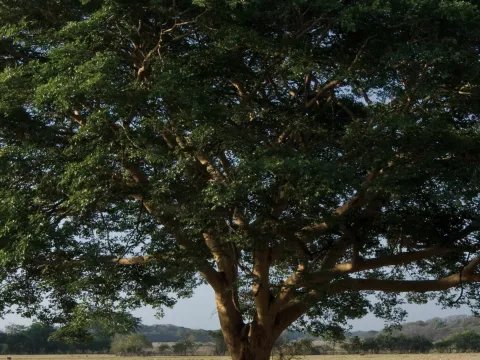
Copaifera officinalis
Copaifera officinalis
Copaifera officinalis is a significant species of the Fabaceae family, native to the tropical forests of Central and South America where it thrives in warm and humid conditions.
What the section contains
Copaifera officinalis
The tree requires a specific tropical climate with consistent temperatures throughout the year, as it is highly susceptible to frost and cold damage at any developmental stage.
Soil requirements focus on deep, fertile substrates with excellent drainage. Although it tolerates a range of soil types, it performs best in well-aerated environments that prevent waterlogging.
Light intensity management is crucial during the early stages of establishment, as seedlings often benefit from partial shade before transitioning to full sunlight exposure as they mature.
Agronomic practices must include careful site selection, ensuring the location is protected from extreme wind events while maintaining high atmospheric humidity levels consistent with tropical regions.
The main commercial product derived from Copaifera is the Copaiba balsam, an oleoresin harvested from the wood of the tree via traditional tapping methods.
This resin is valued globally in the cosmetic and pharmaceutical industries for its anti-inflammatory properties and unique chemical composition of sesquiterpenes.
Yields are influenced by tree age, forest density, and local moisture availability. Sustainable tapping programs ensure that the tree continues to produce resin for many years.
Beyond the balsam, the dense and durable wood of the tree is a highly valued timber product, often used in fine furniture construction and heavy-duty carpentry.
Sustainable harvesting of both resin and timber represents the primary economic objective for commercial plantations of this species in tropical environments.
Plantations of Copaifera officinalis face risks from fungal infections, particularly those that invade the trunk through improper tapping wounds or natural fissures in the bark.
Xylophagous insects, specifically wood-boring beetles, are the most significant pests that can compromise the structural integrity and health of the trees.
- Regular monitoring of tree health.
- Sanitary pruning of infected branches.
- Sealing of tapping holes to prevent moisture accumulation.
- Monitoring insect population density.
- Application of bio-rational pest control measures.
Environmental stress, such as prolonged drought or flooding, can weaken the trees and make them more susceptible to the aforementioned pests and diseases.
Preventative maintenance, including the balanced management of plant density and proper harvesting intervals, remains the best defense against long-term biotic stress.