
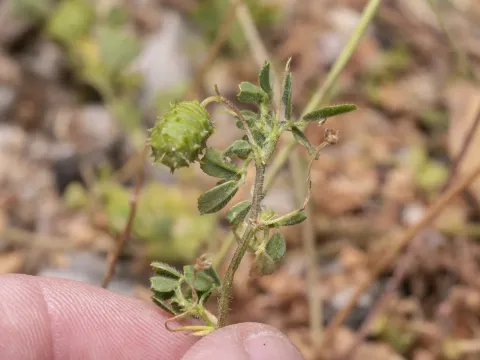
Constricted medic
Medicago constricta
Constricted medic (Medicago constricta) belongs to the family Fabaceae. It is an annual legume native to the Mediterranean region and parts of the Middle East, adapted to harsh environmental conditions.
What the section contains
Constricted medic
This species is well-known for its exceptional drought tolerance. It thrives in open, rocky habitats and dry soils where other vegetation might struggle to survive, contributing to soil nitrogen fixation.
The plant requires well-drained soil to prevent root rot issues. It shows remarkable resilience to saline and alkaline soil conditions, making it a potential candidate for restorative agricultural practices in arid zones.
Climatic requirements involve high solar radiation and low precipitation levels. It is a heliophilous species that performs best when exposed to direct sunlight for the majority of the growing season.
The botanical structure includes a distinctive coiled, constricted pod. The plant utilizes a robust taproot system that facilitates moisture uptake from deeper soil layers during prolonged dry spells.
The primary threats to Medicago constricta include soil-borne pathogens such as Fusarium species, which thrive if water drainage is inadequate. Root diseases can severely impact plant vigor.
Insect pests like alfalfa weevils and aphids are common challenges. These pests can significantly reduce the foliage quality and seed production if not monitored during the active vegetative stage.
Leaf-feeding beetles can cause widespread defoliation in specific regions. Integrated Pest Management (IPM) strategies, including biological control, are recommended to protect the integrity of the stand.
Viral infections transmitted by sap-sucking insects can result in stunting and yellowing of the foliage. Maintaining clean fields and controlling weed hosts are crucial for prevention.
In addition to pests, competition from invasive weeds is a significant concern during the establishment phase. Proper tillage and row management are essential to ensure the crop gains a competitive advantage.