
Colvillea
Colvillea Bojer
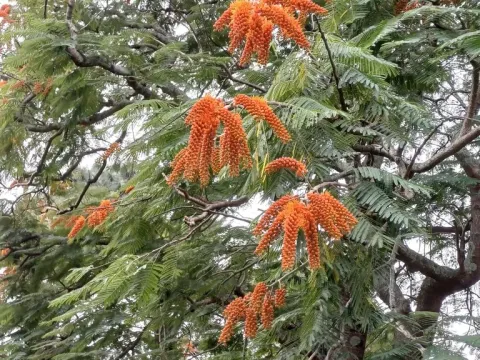
Colvillea (Colvillea racemosa) is a striking deciduous tree belonging to the Fabaceae family. Native to Madagascar, it is highly valued for its intense orange flowers that grow in large, dramatic, grape-like clusters.
What the section contains

Colvillea
The tree thrives in tropical climates and requires a warm environment without frost. It is essentially frost-tender and should only be cultivated in regions where temperatures remain consistently above freezing throughout the year.
Ideal soil conditions for Colvillea include fertile, well-draining loams. Because the root system is sensitive to waterlogging, planting sites must be chosen carefully to ensure adequate drainage, especially in areas with heavy seasonal rainfall.
Full sun is a strict requirement for this culture. Sufficient light exposure is essential for the tree to achieve its characteristic spreading canopy and to stimulate the development of its vibrant inflorescences.
Agronomic management involves periodic pruning to maintain tree shape and applying fertilizers during the growth season. Once established, the tree exhibits a notable degree of drought tolerance, making it suitable for low-maintenance landscaping in suitable zones.
The primary threat to Colvillea is root rot caused by poor soil drainage and waterlogging. Excessive irrigation, especially in compacted soil, often leads to rapid deterioration of the plant's health.
Pests such as scale insects and aphids are common challenges. These insects tend to colonize the stems and undersides of leaves, causing stunted growth and leaf deformation if not managed appropriately.
Fungal leaf spots can occur in environments with poor air circulation or consistently high humidity. Maintaining open crown structure through pruning helps mitigate these risks by improving airflow.
To control pest infestations, horticultural oils or systemic insecticides may be used. It is recommended to observe the plant during the early growth stages to prevent large-scale colonization by garden pests.
Proper sanitation, including the removal of fallen leaves and infected twigs, is crucial for preventing the spread of pathogens. Keeping the base of the tree clean and free of debris ensures overall plant vigor.