
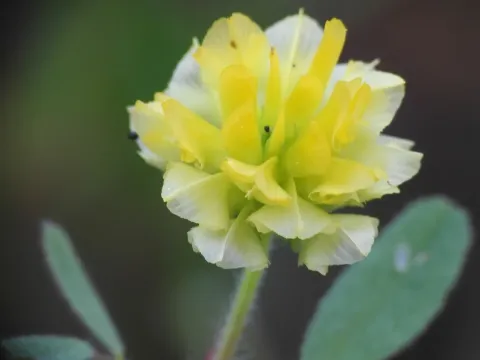
Boissier clover
Trifolium boissieri
Boissier clover (Trifolium boissieri) is an annual legume species native to Mediterranean climates, known for its rapid growth cycle.
What the section contains
Boissier clover
Sowing typically takes place in early spring, once soil temperatures are consistently above 8 degrees Celsius to promote germination.
Seeds should be sown at a shallow depth of approximately 1 to 2 centimeters in a well-prepared seedbed to maximize seedling establishment.
This species is well-adapted to rocky terrains and dry meadows, demonstrating strong vigor even in suboptimal soil conditions.
Efficient plant density management is essential to ensure a high-quality forage yield and to minimize weed competition during the early growth stages.
The plant thrives in well-drained, lime-rich soils and is highly valued for its ability to fix nitrogen in poor soil environments.
It prefers full sunlight exposure and performs poorly in shaded areas, which can significantly stunt its vegetative development.
Although it exhibits drought tolerance, regular moisture during the vegetative phase significantly improves the overall biomass production.
Soil testing is recommended to ensure adequate levels of phosphorus and potassium, which are critical for legume development and root health.
Crop management should focus on maintaining soil structure to facilitate deep root penetration and nutrient uptake throughout the season.
Common diseases affecting this clover include powdery mildew and fungal leaf spots, which are particularly prevalent in humid conditions.
Pests such as sitona weevils can pose a threat to young seedlings, potentially causing significant yield losses if not managed properly.
Integrated pest management strategies are advised, including crop rotation to break the life cycles of soil-borne pathogens.
Monitoring the field during the rapid growth phase is crucial to detect any signs of insect damage or disease outbreaks early on.
Chemical treatments should be applied judiciously, following local agricultural safety guidelines to protect beneficial pollinators.
The optimal time for harvesting as fodder is at the onset of the flowering stage, ensuring a balance between biomass quantity and nutrient quality.
For hay production, grass is mowed and left to dry in windrows to reduce moisture content while preserving essential vitamins and minerals.
Minimal mechanical handling is recommended during the drying process to prevent leaf shattering, as leaves contain the majority of the plant's protein.
After the primary harvest, the remaining stubble can provide valuable forage for livestock in managed grazing systems.
Proper storage in dry, well-ventilated barns is necessary to prevent spoilage and maintain the quality of the harvested clover hay over time.