
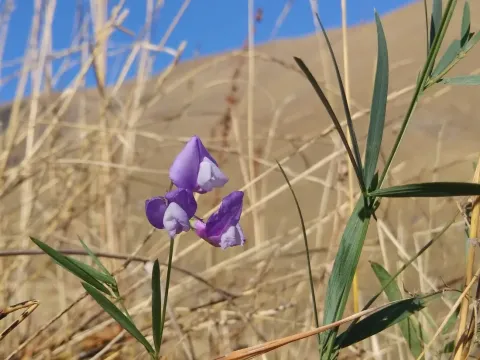
Blue vetchling
Lathyrus cyaneus
Sowing of blue vetchling typically takes place in early spring, once the soil has warmed to a temperature of 5–8 degrees Celsius. Timing is crucial to ensure consistent moisture for germination.
What the section contains
Blue vetchling
Given the hard seed coat, scarification is highly recommended prior to planting to enhance the germination rate and ensure uniform seedling emergence.
Seed depth should be maintained between 3–5 cm. Shallower planting risks drying out, while deeper sowing may delay emergence in cooler soil conditions.
The standard seeding rate for forage production is 10–12 kg per hectare, which facilitates a dense canopy that suppresses weed growth during the establishment phase.
In regions with mild winters, late autumn planting is sometimes tested, but spring sowing remains the most reliable method for achieving maximum stand density.
Lathyrus cyaneus is a robust member of the Fabaceae family, highly valued for its adaptability to various soil types, particularly loamy and sandy soils with neutral pH.
This species is exceptionally cold-hardy, allowing it to survive harsh winter conditions that might kill less resilient legume varieties, making it suitable for northern climates.
While blue vetchling thrives in full sun, it shows good tolerance for partial shade, which is beneficial when grown in polyculture or mixed grassland systems.
Proper soil aeration is essential for healthy root development and the activity of symbiotic nitrogen-fixing bacteria, which significantly boost soil fertility.
The crop requires moderate moisture levels during the vegetative growth phase but does not perform well in waterlogged, poorly drained soil conditions.
Under optimal management, forage yields for blue vetchling can reach 15–20 metric tons of green mass per hectare, providing excellent feedstock for livestock.
Seed production yields generally range from 0.8 to 1.5 metric tons per hectare, depending on seasonal rainfall patterns and successful pollination in the field.
The nutritional profile, characterized by high protein and mineral content, makes this crop a superior choice for farmers focused on high-quality hay production.
Peak biomass quality occurs at the start of the flowering stage, making this the critical window for harvesting to maximize digestible nutrient intake for animals.
As a perennial, the crop provides reliable seasonal growth for several years, reducing the need for annual land preparation and planting costs.
Fungal pathogens such as powdery mildew and Ascochyta leaf spot represent the primary threats, especially during periods of high humidity and poor ventilation within the stand.
Nodule weevils can cause significant damage to the root system, potentially reducing the plant's ability to fix nitrogen and lowering overall crop vigor.
Effective management involves preventive measures like crop rotation, the use of certified disease-free seeds, and monitoring field conditions for early infection signs.
Insecticide application should be targeted and performed only when economic thresholds are met to protect beneficial insect populations in the field.
- Integrated Pest Management (IPM)
- Crop rotation practices
- Seed treatment against fungi
- Proper field sanitation
Hay harvest should be conducted during the early flowering period to balance biomass volume with the optimal concentration of proteins and vitamins.
When harvesting for seeds, mechanical combine settings must be adjusted to prevent excessive damage to the delicate seeds during the threshing process.
Storage of the harvested seed requires careful moisture monitoring, ideally keeping levels below 14% to prevent molding and degradation during winter storage.
Post-harvest residues can be incorporated into the soil, acting as a green manure that improves organic matter levels for subsequent crops in the rotation.
The brittleness of the pods when dry makes it necessary to schedule the seed harvest promptly to avoid shattering losses during field operations.