
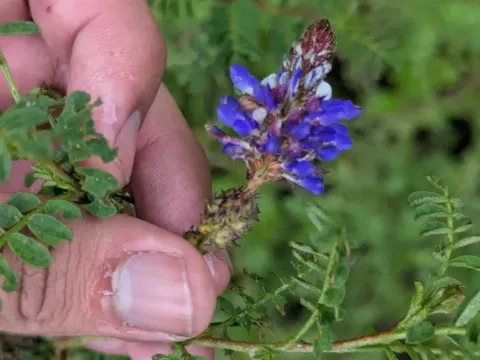
Blue prairie clover
Dalea coerulea
Dalea coerulea, commonly known as blue prairie clover, is a perennial legume species. It is recognized for its significant role in nitrogen fixation, which contributes to overall soil health and nitrogen levels in agricultural landscapes.
What the section contains
Blue prairie clover
The plant originates from the Americas, typically inhabiting regions that experience hot and dry summer months. It possesses a deep taproot, making it highly resilient to drought conditions compared to standard forage grasses.
Cultivation requires well-drained, porous soils. It is particularly sensitive to waterlogging, so fields with poor drainage or heavy clay content should be avoided to prevent root damage and ensure uniform growth across the plot.
This crop thrives in sunny environments and prefers temperatures consistent with temperate to subtropical climates. It is highly valued for its ability to maintain biomass production during stressful environmental periods.
In terms of agricultural utility, the plant serves as an excellent high-protein forage source for livestock. Additionally, its deep root structure helps in breaking up soil compaction and improving aeration in deeper soil layers.
Root rot is the most significant disease risk for Dalea coerulea, primarily occurring in soils that lack adequate drainage or during excessively rainy growing seasons. Proper site selection is the best preventive measure.
Pests such as aphids and various species of leaf-eating beetles may cause aesthetic and physiological damage. Monitoring programs should be established during the vegetative stage to evaluate the need for intervention.
Weed management is vital during the establishment phase, as the young seedlings grow relatively slowly and can be easily overshadowed by fast-growing weeds. Early mechanical weeding is highly recommended.
Fungal diseases, including powdery mildew, may emerge under conditions of high humidity and stagnant air. Maintaining proper planting densities will facilitate air movement and minimize these risks significantly.
Integrated pest management strategies should be applied to manage insect populations effectively. This includes encouraging natural predators and using selective bio-pesticides when thresholds of infestation are exceeded.